
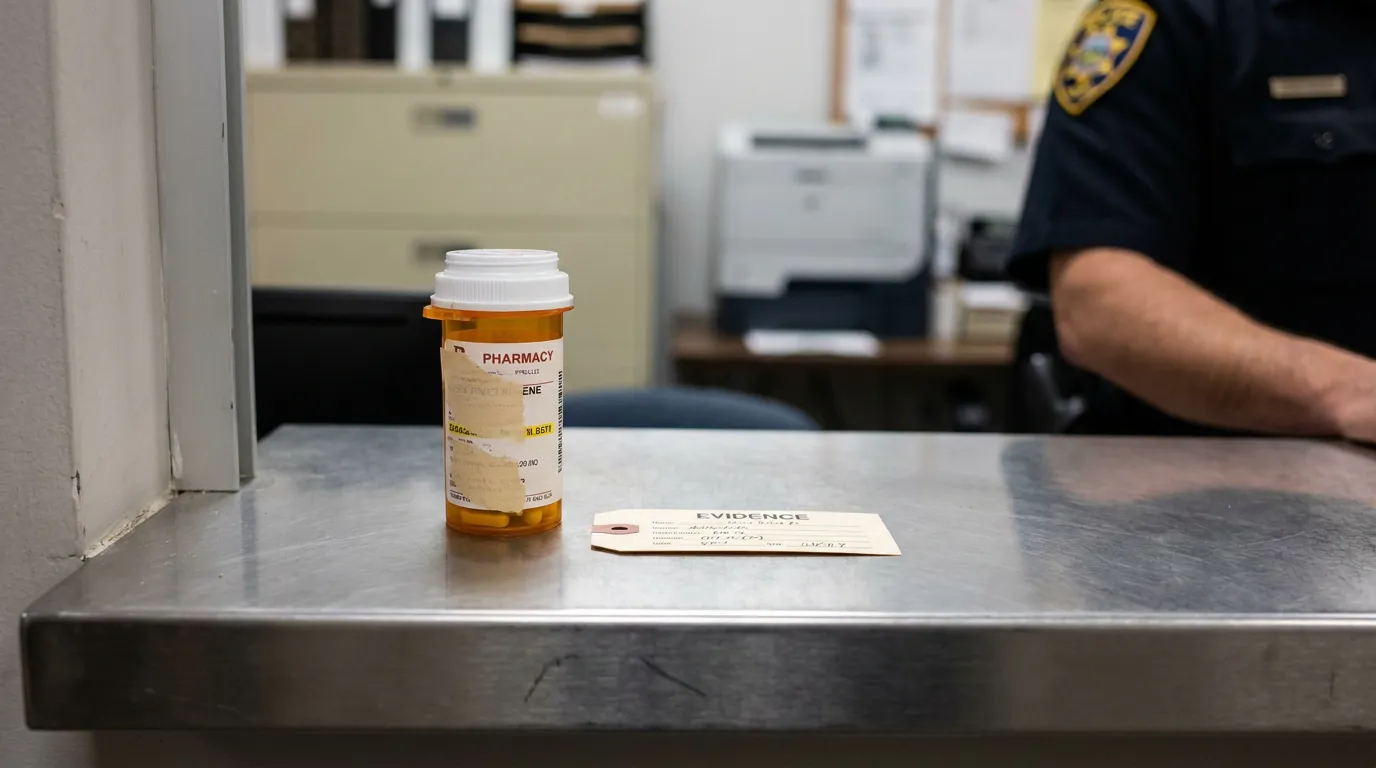
Understanding Drug Charges and Constructive Possession in Salt Lake City
Key Takeaways: Utah recorded more than 42,000 drug offenses in 2024, reflecting aggressive enforcement that increases pressure on defendants. A central concept is constructive possession, a legal theory allowing the state to charge you with possessing a controlled substance even when it wasn’t physically on your body, focusing on knowledge and control rather than proximity. Utah penalties scale with substance type, quantity, and prior record, ranging from class B misdemeanors for small marijuana amounts to first and second degree felonies for larger quantities or harder drugs. Many cases turn on whether evidence was lawfully obtained, making Fourth Amendment challenges to stops, searches, and consent pivotal. Limited protections, such as medical amnesty in overdose situations, may apply under specific conditions. Early legal review of evidence and constitutional rights is the first step toward protecting your future.
Utah saw more than 42,000 drug offenses recorded in 2024, reflecting aggressive controlled substance enforcement statewide. If you’ve been arrested or cited, you need to understand how the law connects a person to a drug, even when never in their hand. Utah defines possession broadly, and prosecutors often build cases on the theory that you controlled a substance through access to a car, home, or shared space.
If you’re facing drug possession charges in Utah, the team at Nix Law is ready to help. Call us at 385-444-2442 or reach out through our confidential case review form to discuss your situation.
💡 Pro Tip: Write down everything you remember about your arrest while it’s fresh, including who was present, what officers said, and whether you consented to any search. These details often matter later.
What Is Constructive Possession in a Utah Drug Case?
Constructive possession allows the state to charge you with possessing a controlled substance even if it wasn’t physically on your body. Under Utah Code § 58-37-2(1)(ii), possession means the joint or individual ownership, control, occupancy, holding, retaining, belonging, maintaining, or use of controlled substances, and it’s sufficient if shown that the person jointly participated with one or more persons in the use, possession, or control. The prosecution doesn’t have to prove the drugs were exclusively yours.
The doctrine raises difficult questions in shared living arrangements and group settings. Asking what is constructive possession in a utah drug case is important because the answer turns on knowledge and control rather than mere presence. Courts generally require more than proximity, and the prosecution carries the burden of proving guilt beyond reasonable doubt.
Defending against constructive possession frequently involves disputing knowledge. A person may be near a controlled substance without knowing it exists or having authority over it. Defense strategy often focuses on whether the state can link a defendant to the drugs through credible evidence rather than assumption.
Why the 2024 Numbers Matter for Defendants
The volume of Utah drug offenses in 2024 signals that enforcement remains a priority. High case volumes can mean rushed investigations, crowded dockets, and pressure to resolve matters quickly. For defendants, this environment makes careful case analysis essential.
These drug crime statistics across Utah reflect a wide range of conduct, from small marijuana amounts to felony allegations involving methamphetamine, heroin, or fentanyl. Understanding where your charge falls helps you anticipate what comes next.
💡 Pro Tip: Never assume a misdemeanor charge is minor. Even a first marijuana conviction can, in some circumstances, lead to a six-month driver’s license suspension, for example, if the offense occurred while the person was operating a motor vehicle and the court finds that a suspension is likely to reduce recidivism and is in the interest of public safety.
How Utah Classifies Drug Possession Charges
Utah penalties scale with substance type, quantity, and prior record. According to Utah Code Section 58-37-8(2)(d), possession of marijuana under 100 pounds is generally a class B misdemeanor punishable by up to six months in jail and a $1,000 fine for a first or second offense, with a third conviction generally treated as a class A misdemeanor and a fourth or subsequent conviction elevated to a third-degree felony. The NORML Utah penalties overview continues to reflect an older tiered penalty structure and has not been updated to describe the post-reform under-100-pound classification.
Larger quantities and harder substances raise the stakes dramatically. Possession of 100 pounds or more of marijuana is a second degree felony carrying one to fifteen years imprisonment and fines reaching $10,000. Under Utah Code § 58-37-8(2)(d), possession of marijuana in an amount less than 100 pounds is generally classified as a class B misdemeanor for a first or second offense.
Here is a simplified overview of common marijuana-related penalties under Utah law:
| Offense | Classification | Maximum Penalty |
|---|---|---|
| Possession under 100 lbs (first or second) | Class B misdemeanor | 6 months, $1,000 |
| Possession under 100 lbs (third) | Class A misdemeanor | 1 year, $2,500 |
| Possession of 100+ lbs | Second degree felony | 1 to 15 years, $10,000 |
| Distribution of marijuana | Third degree felony | 5 years, $5,000 |
| Paraphernalia possession | Class B misdemeanor | 6 months, $1,000 |
Distribution and manufacturing allegations are treated far more seriously than simple possession. Under Utah Code § 58-37-8(1)(a), it’s unlawful to knowingly and intentionally produce, manufacture, dispense, or possess with intent to distribute a controlled or counterfeit substance. For Schedule I or II substances such as heroin or fentanyl, distribution is generally a second degree felony punishable by up to fifteen years, with subsequent convictions elevated to a first degree felony.
Defenses and Procedural Protections in Drug Cases
Many drug cases rise or fall on whether evidence was lawfully obtained. The Fourth Amendment protects against unreasonable searches and seizures, and a successful challenge can affect whether key evidence is admissible. A Salt Lake City drug lawyer will examine the traffic stop, the search, and any claimed consent.
Common areas a defense review may explore include:
- Whether officers had legal justification for the stop or search
- Whether consent to search was voluntary or coerced
- Whether the chain of custody for the substance is intact
- Whether the prosecution can prove knowledge and control
- Whether constitutional protections were observed during questioning
Utah also provides limited medical amnesty protection in overdose situations. Under § 58-37-8(16)(b), a person who acts in good faith to seek medical assistance for a drug-related overdose may receive protection from prosecution for certain offenses, including possession or use of less than 16 ounces of marijuana and possession of certain other scheduled substances. This protection is narrow and applies only under specific conditions, "good faith" doesn’t include seeking assistance during law enforcement’s execution of a search or arrest warrant.
💡 Pro Tip: If you’re unsure whether evidence in your case was lawfully gathered, ask before any hearing. Procedural issues can sometimes be raised early through pretrial motions.
For a deeper look at how charges are built and challenged, our drug possession defense resources explain what to expect at each stage.
Constructive Possession Questions That Often Arise
Asking what is constructive possession in a utah drug case usually leads to follow-up questions about specific situations. Roommates, passengers in a vehicle, and guests in a home frequently worry about being charged for someone else’s drugs. The law focuses on knowledge and control, and the state must prove these elements rather than rely on location alone.
Early legal review matters because a Utah controlled substance attorney can evaluate whether evidence genuinely supports the prosecution’s theory or rests on assumption.
💡 Pro Tip: If police want to question you about drugs found in a shared space, you generally have the right to remain silent and request an attorney before answering.
Frequently Asked Questions
1. Can I be charged if drugs were found in a car I did not own?
Possibly. Utah’s broad definition of possession allows charges based on control or joint participation, but the state must prove you knew about the drugs and had authority over them. Mere presence in a vehicle isn’t enough.
2. Does a drug conviction affect my driver’s license?
Often, yes, but not automatically for every conviction. Under Utah Code § 53-3-220(1)(c)(i), the division shall immediately suspend a person’s license for six months upon conviction under the Controlled Substances Act, Drug Paraphernalia Act, Imitation Controlled Substances Act, Controlled Substance Precursor Act, Clandestine Drug Lab Act, or related offenses, including misdemeanor offenses, but only if the offense occurred while the person was an operator of a motor vehicle and the court finds that a driver license suspension is likely to reduce recidivism and is in the interest of public safety. A person’s driving privilege may be reinstated before completion of the suspension period if the court notifies the Driver License Division that the defendant is participating in or has successfully completed a drug court program as defined in Section 78A-5-201.
3. What is the difference between actual and constructive possession?
Actual possession means the substance was physically on you. Constructive possession means you had knowledge of and control over the location where drugs were found. The statutory text appears in the Utah controlled substance distribution statute.
4. Are local drug ordinances different from state law?
Generally no. Under § 58-37-8(18), a political subdivision may not enact an ordinance less restrictive than this chapter, so enforcement standards remain uniform statewide.
5. What should I do first after a drug arrest?
Avoid discussing details with anyone besides legal counsel, preserve your memory of events, and seek guidance promptly. Early review of search and evidence issues can shape your defense.
Moving Forward With Confidence
Drug charges in Salt Lake City carry real consequences, but an accusation is not a conviction. With more than 42,000 Utah drug offenses recorded in 2024, the system processes many cases quickly, making careful, individualized attention essential. Understanding constructive possession, statutory penalties, and your constitutional protections gives you a foundation for sound decisions. You can find additional educational articles on our Utah criminal defense blog.
If you’re ready to discuss drug offense defense in Utah, the attorneys at Nix Law are prepared to listen and explain your options. Call 385-444-2442 today or use our secure contact page to schedule a confidential consultation and take the next step toward protecting your future.