
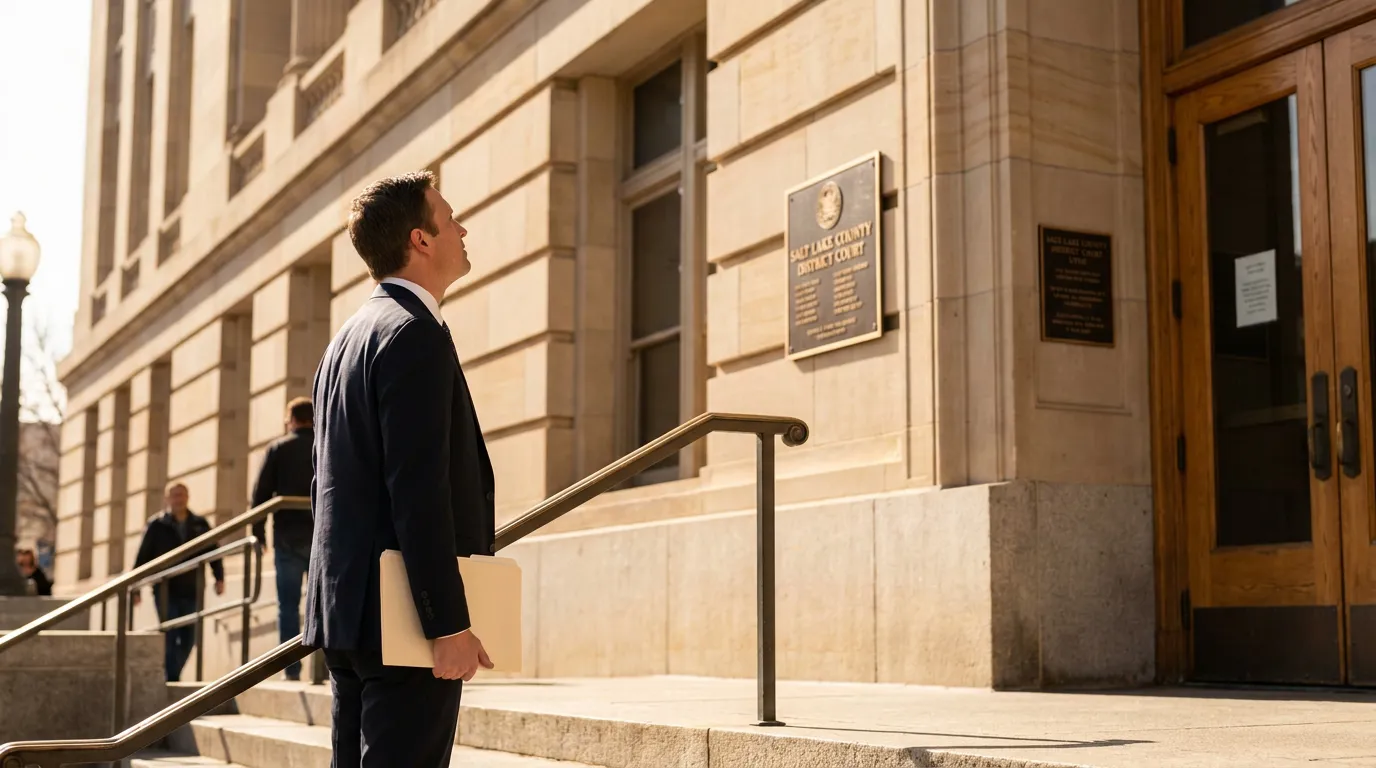
Understanding the Stakes of a Felony DV Charge in Salt Lake City
Key Takeaways: A third-degree felony domestic violence conviction in Utah generally carries up to five years in prison and a fine of up to $5,000, plus lasting consequences including loss of firearm rights, employment barriers, immigration effects, and a permanent record. Utah does not treat domestic violence as a standalone crime but as a category attached to underlying offenses committed by one cohabitant against another. Penalties can escalate sharply through the habitual violent offender enhancement, which allows a third-degree felony to be punished as a first-degree felony, raising exposure to five years to life when the underlying offense qualifies as a violent felony. The presence of a child during the alleged offense can further increase charge severity. However, penalties are not automatic, and important procedural safeguards, including the state’s burden of proof beyond a reasonable doubt, create meaningful defense opportunities. Because every case is fact-dependent, early legal guidance is essential.
These base penalties can grow substantially with aggravating circumstances or prior record. If you face accusations, understanding what you actually face is the first step toward building a meaningful defense. This article breaks down the statutory framework, the enhancements that can raise your exposure, and the practical realities defendants encounter.
If you are facing charges, the criminal defense team at Nix Law is ready to review your situation and protect your rights. Call us today at 385-444-2442 or reach out through our confidential contact page to discuss your options. Early guidance can make a meaningful difference.

How Utah Defines a Domestic Violence Offense
Utah does not treat "domestic violence" as a single, standalone crime but rather as a category attached to other underlying offenses. Under Utah Code § 77-36-1, domestic violence means any criminal offense involving violence or physical harm, the threat of violence or physical harm, or any attempt, conspiracy, or solicitation to commit such an offense, when committed by one cohabitant against another. This definition determines which underlying crimes can rise to felony DV charges.
The relationship between the parties is central to whether an offense qualifies as domestic violence. The Utah Domestic Violence Coalition explains that abuse is a broad concept covering many forms of harm within relationships. According to this statewide victim-services authority, domestic violence is an umbrella term that includes many forms of abuse within relationships and can occur between partners, family members, caregivers, and more. The coalition’s overview of relationship abuse provides helpful context.
💡 Pro Tip: The label "domestic violence" attaches to a wide range of underlying charges. Ask early whether the alleged conduct meets the cohabitant relationship requirement, because that threshold question can shape your entire defense.
Domestic Violence Utah Penalties for a Third-Degree Felony
The core domestic violence Utah penalties for a third-degree felony include incarceration, financial penalties, and a permanent criminal record. A third-degree felony in Utah is generally punishable by up to five years in prison and a fine that can reach $5,000, subject to statutory exceptions and judicial discretion. Beyond the sentence imposed by the court, a felony DV conviction can trigger consequences extending well past any prison term.
Collateral consequences frequently surprise defendants who focus only on jail time. These effects can influence employment, housing, and firearm rights for years. Common consequences include:
- Loss of firearm rights under state and federal law
- Difficulty securing employment or professional licensing
- Immigration consequences for non-citizens
- Restrictions imposed through protective orders
- A permanent record affecting future sentencing
Whether these penalties apply in full depends on the specific facts of each case. Courts consider the circumstances, the defendant’s history, and any mitigating factors when imposing a sentence. Our overview of domestic violence penalties Utah offers additional detail.
| Offense Level | General Maximum Prison Term | General Maximum Fine |
|---|---|---|
| Third-Degree Felony | Up to 5 years | Up to $5,000 |
| Enhanced as First-Degree (habitual violent offender) | 5 years to life | Up to $10,000 |
💡 Pro Tip: Fines are only part of the financial picture. Ask about restitution, surcharges, and treatment program costs, which are often ordered separately and can add up over time.
When Enhancements Raise Your Exposure
Utah law allows certain enhancements that can push a third-degree felony DV conviction into far more serious territory. The most significant is the habitual violent offender enhancement. Under Utah Code § 76-3-203.5(1)(b), the habitual violent offender enhancement defines a habitual violent offender as a person convicted within the state of any violent felony who, on at least two previous occasions, has been convicted of a violent felony and committed to either prison in Utah or an equivalent correctional institution of another state or of the United States, either at initial sentencing or after revocation of probation.
The practical effect is a dramatic increase in potential punishment. Utah Code § 76-3-203.5(2) provides that if the trier of fact determines beyond a reasonable doubt that a person is a habitual violent offender, the penalty for a third-degree felony is imposed as if the conviction were for a first-degree felony, provided the current offense itself qualifies as a violent felony. That shift can move a defendant from a maximum of five years to five years to life. The full text appears in Utah’s habitual violent offender statute.
Important procedural safeguards accompany this enhancement. The determination is handled as a separate proceeding requiring proof beyond a reasonable doubt, and where the defendant contests the alleged priors, the jury is generally not informed of prior convictions until after it returns a verdict on the underlying charge. Utah Code § 76-3-203.5(6) provides that the habitual violent offender enhancement does not apply when (a) the offense being sentenced is a grievous sexual offense, child kidnapping under Section 76-5-301.1, aggravated kidnapping under Section 76-5-302, or forcible sexual abuse under Section 76-5-404, and (b) applying the enhancement would result in a lower maximum penalty than the penalty provided under the section describing the offense. These safeguards can create meaningful defense opportunities.
💡 Pro Tip: If prosecutors signal a habitual violent offender enhancement, request early clarification of the alleged prior convictions. Challenging whether those priors qualify, or whether prison commitment occurred, can be pivotal.
The Role of a Child Witness in Charging Decisions
The presence of a child during an alleged offense can elevate the seriousness of a domestic violence case in Utah. State resources note that abuse includes witnessing domestic violence, meaning DV in the presence of a child. Utah treats this circumstance with particular seriousness.
Utah is notable for how it handles offenses committed in front of children. Utah’s statute makes it a separate crime to commit an act of domestic violence in the presence of a child. Nationally, treating child presence as an aggravating circumstance usually results in a longer jail term, an increased fine, or both. This explains why charging decisions can escalate quickly when a child was present.
The reasoning reflects concern for children’s wellbeing. State-aligned resources observe that children who witness abuse often experience emotional distress, fear and confusion, and that exposure can affect their development, behavior and sense of stability. An alleged child witness can materially change the stakes of a case.
Building a Defense Against Felony DV Allegations
A strong defense begins with the presumption of innocence and careful examination of the state’s evidence. Prosecutors carry the burden of proving every element beyond a reasonable doubt, and that burden creates room to challenge weak or inconsistent proof. Defendants have the right to question witness credibility, scrutinize how evidence was gathered, and assert applicable constitutional protections.
Every case turns on its own facts, so no outcome can be promised. Defense strategy often focuses on whether the cohabitant relationship element is satisfied, whether the alleged conduct meets the statutory definition, and whether any enhancement is legally supported. Thorough review of police reports, medical records, and witness statements often reveals gaps that matter. Our dedicated domestic violence utah penalties lawyer resource explains how our firm handles these cases.
💡 Pro Tip: Avoid discussing your case with anyone other than your attorney, including through calls or messages that may be recorded. Statements made after an arrest are frequently used by the prosecution.
Frequently Asked Questions
1. How much prison time can a third-degree felony DV conviction carry in Utah?
A third-degree felony generally carries up to five years in prison and a fine of up to $5,000. Actual sentences depend on the facts, the defendant’s history, and judicial discretion. Enhancements can increase this exposure substantially.
2. Can a prior record increase my sentence?
Yes, under certain circumstances a prior record can significantly increase your exposure. Utah Code § 76-3-203.5(2) allows a third-degree felony to be punished as a first-degree felony when a defendant qualifies as a habitual violent offender, requiring the current offense to be a violent felony and at least two prior violent felony convictions with prior commitments to prison in Utah or equivalent correctional institutions in another state or of the United States, either at initial sentencing or after revocation of probation.
3. Does a child being present change the penalties?
It can. Utah treats committing domestic violence in the presence of a child as a separate offense in certain situations, which may result in harsher consequences. The specific charging decision depends on the facts and prosecutorial discretion.
4. Is domestic violence a separate crime in Utah?
Not exactly. Domestic violence is a category attached to underlying offenses when committed by one cohabitant against another, as defined in Utah Code § 77-36-1. The underlying crime determines the baseline penalty range.
5. What should I do first if I am charged?
Protect your rights by exercising your right to remain silent and consulting a defense attorney promptly. Early legal guidance helps preserve evidence and evaluate potential defenses. Outcomes depend on the specific facts of each case.
Protecting Your Future After a Felony DV Charge
A third-degree felony domestic violence conviction in Utah carries serious consequences, but the penalties are not automatic and are subject to important legal safeguards. From the statutory definition under Utah Code § 77-36-1 to the habitual violent offender enhancement under Utah Code § 76-3-203.5, the law contains both risks and protections that a careful defense can address. Aggravating factors, such as an alleged child witness, can raise the stakes, yet the state must still meet its burden of proof. Because every case is fact-dependent, individualized guidance is essential.
If you or a loved one is facing a felony DV charge in Salt Lake City, the defense team at Nix Law is prepared to stand between you and the prosecution. Call us now at 385-444-2442 or connect through our secure case review request to take the first step toward protecting your rights and your future.