
Understanding the State’s Burden in Utah Drug Possession Cases
Key Takeaways: To convict on constructive possession, Utah prosecutors must prove beyond a reasonable doubt that you knowingly and intentionally had the ability to exercise dominion and control over a controlled substance, not merely that drugs were found near you. Because Utah Code § 58-37-2 defines possession or use broadly to include joint or group control, more than one person sharing a vehicle, residence, or space can be charged for the same substance. The state must establish each element, including knowledge and intent under § 58-37-8(2)(a), and prove the item qualifies as a controlled substance through testing and chain-of-custody documentation. Mere proximity is generally insufficient, and the sufficiency of the evidence depends on the totality of the circumstances. Charges are graded by drug schedule and prior convictions, and control of a place can support a separate offense under § 76-18-212. A defense review examines whether the search was lawful, whether knowledge existed, and whether procedural safeguards were followed, since the failure to prove any single element can defeat the charge.
In Utah, prosecutors cannot secure a conviction simply because drugs were found near you. They must prove, beyond a reasonable doubt, that you knowingly and intentionally had the ability and intent to control a controlled substance. This is the heart of the burden of proof in a drug case in Utah, and it becomes especially complex when the drugs were not physically on your person. Understanding how the state builds its case is the first step toward protecting your rights and evaluating potential weaknesses in the prosecution’s theory.
📞 If you have been arrested or are under investigation, do not wait to get answers. The team at Nix Law offers guidance grounded in Utah drug possession law. Call 385-444-2442 or reach out through the firm’s confidential case review form to discuss your situation.
What Is Constructive Possession in a Utah Drug Case?
Constructive possession describes a legal theory in which the state alleges you controlled a controlled substance even though it was not found directly on your body. Utah law defines possession broadly. Utah Code § 58-37-2 defines ‘possession’ or ‘use’ as the joint or individual ownership, control, occupancy, holding, retaining, belonging, maintaining, or the application, inhalation, swallowing, injection, or consumption, as distinguished from distribution, of controlled substances, and includes individual, joint, or group possession or use of controlled substances. That expansive language is precisely why so many people ask what is constructive possession in a utah drug case, because it allows charges based on proximity and circumstances rather than physical custody alone.
The statutory definitions matter because they carry into the offense itself. Section 58-37-2 is the definitional statute of the Utah Controlled Substances Act, supplying the terms prosecutors rely on when charging possession offenses under related provisions like 58-37-8. You can review the full text of the Utah Controlled Substances Act statutory definitions section to see how broadly these terms are written.
Actual Possession Versus Constructive Possession
Actual possession means the substance was found on you, such as in your pocket or your hand. Constructive possession, by contrast, applies when drugs are found in a shared vehicle, a residence, or another space you allegedly controlled. While the statute lists "control" as a form of possession, Utah courts have shaped the standard central to constructive possession: prosecutors must show the defendant had the ability to exercise dominion and control over the substance rather than mere physical custody. In practice, this distinction often decides whether a case proceeds or falls apart.
💡 Pro Tip: If drugs were discovered in a car or home you shared with others, write down who else had access to that space and when. That timeline can become critical to challenging the state’s control theory.
The Elements Prosecutors Must Prove
To convict, the state must establish each element of the offense, and the failure to prove any one can defeat the charge. Utah’s possession offenses are codified in the Utah Controlled Substances Act. The offense prohibits knowing and intentional possession or use of a controlled substance without a valid prescription under § 58-37-8(2)(a). Because the definitions in § 58-37-2 are incorporated into these offenses, the prosecution must connect the statutory meaning of control to the specific facts of your case.
The Knowledge and Intent Requirement
A conviction generally requires proof that you acted knowingly and intentionally. Utah Code § 58-37-8(1)(a) makes it unlawful to knowingly and intentionally produce, distribute, or possess a controlled substance with intent to distribute, while simple possession under § 58-37-8(2)(a) likewise requires that you acted knowingly and intentionally. This mental-state element is often where constructive possession cases are contested, because presence near a substance does not automatically prove awareness of it. Courts may consider whether you knew the drugs existed and whether you understood their nature. You can read the underlying prohibited acts statute for the exact statutory language on intent.
Proving Dominion and Control
Beyond knowledge, prosecutors must show you had the ability to exercise dominion and control over the substance. This is where dominion and control over drugs in Utah becomes a fact-intensive question. The state may point to ownership of the vehicle, presence of personal items near the drugs, statements you made, or your access to the location. However, mere proximity is generally not enough on its own, and the sufficiency of the evidence often depends on the totality of the circumstances.
💡 Pro Tip: Statements to officers can be used to establish knowledge and control. In many cases, politely declining to answer questions until you consult a lawyer helps preserve your defenses.
When More Than One Person Shares a Space
Utah law expressly allows more than one person to be charged with possessing the same substance. Because Utah’s definition recognizes "joint or group" possession, more than one person can be deemed in constructive possession of the same substance, which is central to cases involving shared vehicles, residences, or spaces. This means that being a passenger in a car or a roommate in an apartment can expose you to charges even when the drugs belonged to someone else.
The concept of control over a place is also written into related Utah law. Under Utah Code § 76-18-212(2)(a), the offense applies to an owner, tenant, licensee, or person in control of a building, room, tenement, vehicle, boat, aircraft, or other place. That provision also requires that the actor knowingly and intentionally permits a person to occupy the place while unlawful controlled-substance activity occurs, reinforcing the knowledge element under § 76-18-212(2)(b). These provisions show how central control and knowledge are across Utah’s drug crimes framework in Salt Lake City and statewide.
How Constructive Possession Charges Are Graded
The classification of a controlled substance possession charge in Utah depends on the drug schedule and any prior convictions. Utah Code § 58-37-8(2)(b)-(d) sets the misdemeanor and felony classifications for possession offenses. For certain related offenses, penalties escalate with repeat convictions. Under § 76-18-212(3)(a), a violation may be a class B misdemeanor on a first conviction and a class A misdemeanor on a second conviction. The following table offers a simplified illustration and is not a substitute for individualized legal analysis.
| Factor | General Effect on Grading |
|---|---|
| Drug schedule (I, V) | Higher schedules may increase severity |
| First conviction | May be charged as a lower-level offense |
| Repeat conviction | May elevate the classification |
| Control of a place | Can support a separate charge under § 76-18-212 |
Prosecutors must also prove the item qualifies as a controlled substance under the statute. Utah Code § 58-37-2 defines "controlled substance" as a drug or substance included in Schedules I, V of Section 58-37-4, the federal Controlled Substances Act, an analog, or listed in Section 58-37-4.2. This requirement often involves laboratory testing and chain-of-custody documentation, both of which can be scrutinized.
💡 Pro Tip: Ask whether the substance was independently tested and how it was stored. Gaps in chain of custody can undermine proof that the item is a controlled substance.
Practical Defense Considerations
A defense-focused review examines whether the state can actually satisfy every element. Common areas that a defense analysis may explore include:
- Whether the search or seizure complied with constitutional requirements
- Whether the evidence shows knowledge, not just proximity
- Whether more than one person had equal access to the space
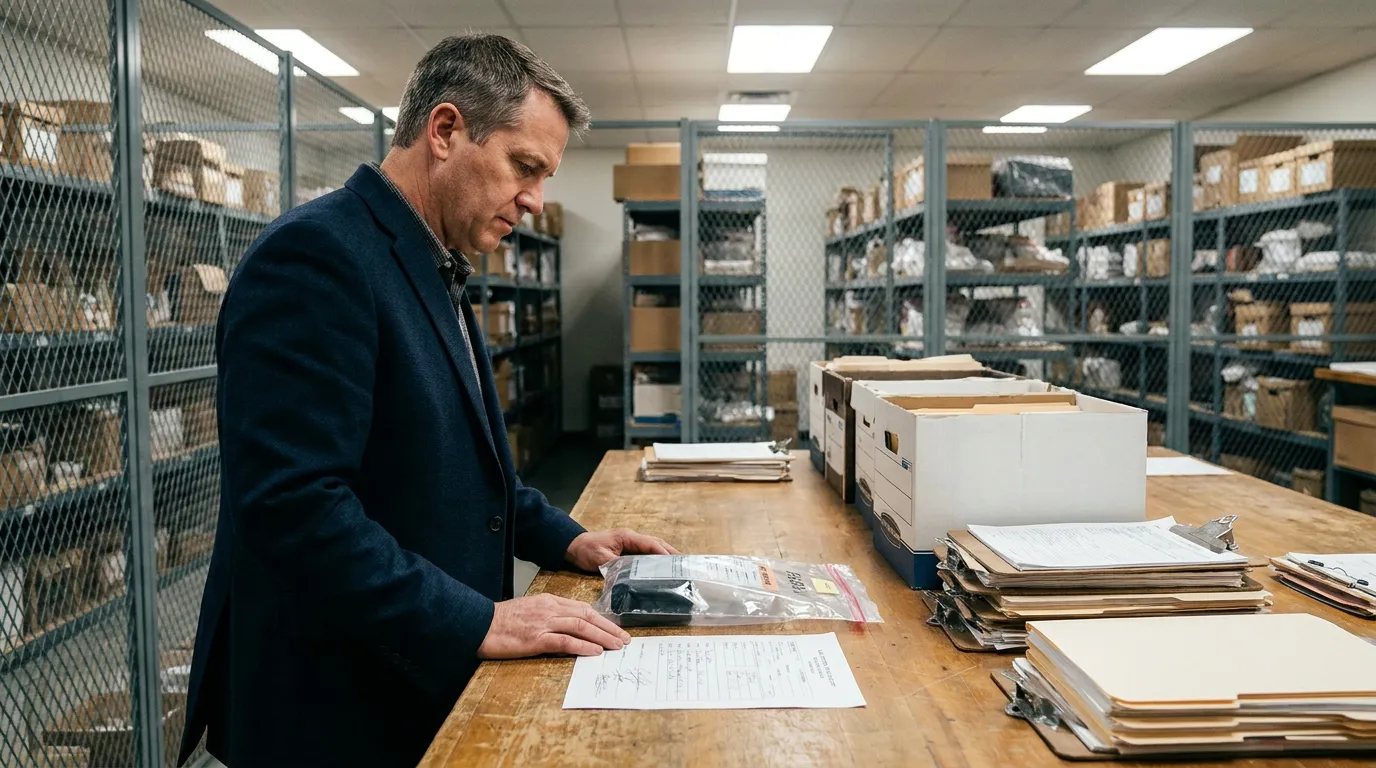
- Whether chain-of-custody or testing procedures were properly followed
- Whether statements were obtained lawfully
Because outcomes depend heavily on the specific facts, general information cannot predict any particular result. If you want a deeper explanation of this doctrine, this overview of what is constructive possession in a utah drug case can help you understand the framework before you speak with counsel.
💡 Pro Tip: Preserve any evidence of who controlled the vehicle or residence, including texts, receipts, or witness contacts, as early as possible.
Frequently Asked Questions
-
Can I be charged if the drugs were not mine?
Yes. Under Utah’s joint and group possession definitions, you may be charged even if the substance belonged to someone else, provided the state believes it can prove your knowledge and control. Whether that proof succeeds depends on the facts.
-
Is being near drugs enough to convict me?
Generally, no. Proximity alone is often insufficient, because prosecutors must also establish knowledge and the ability to exercise dominion and control over the substance. Courts may weigh the totality of the circumstances.
-
What does the prosecution have to prove about my state of mind?
The state must show you acted knowingly and intentionally, as required under Utah Code § 58-37-8(2)(a). This mental-state requirement is frequently contested in constructive possession cases.
-
Does it matter whose car or home the drugs were found in?
It can. Control over a place is a recognized element under Utah Code § 76-18-212, so ownership or tenancy may be used as circumstantial evidence, subject to exceptions and the specific facts.
-
Should I talk to police before getting legal help?
In many cases, it is wise to remain silent until you consult a Salt Lake City drug defense attorney, because statements can be used to establish knowledge and control.
Protecting Your Rights After a Possession Charge
Constructive possession cases are rarely as straightforward as they first appear. The state carries a demanding burden that touches knowledge, control, the identity of the substance, and constitutional compliance during the investigation. Because Utah’s statutory definitions are broad, careful legal analysis of proving possession in Utah can reveal weaknesses that meaningfully affect the case. No outcome is guaranteed, and every situation turns on its own facts.
📞 If you are facing a controlled substance possession charge, informed guidance can make a difference. Learn more about the firm’s approach to drug possession attorney services in Salt Lake City, then connect with Nix Law’s team or call 385-444-2442 to discuss your defense options today.