
When A Drug Dog Sniff Traffic Stop In Utah Turns Into A Fentanyl Case
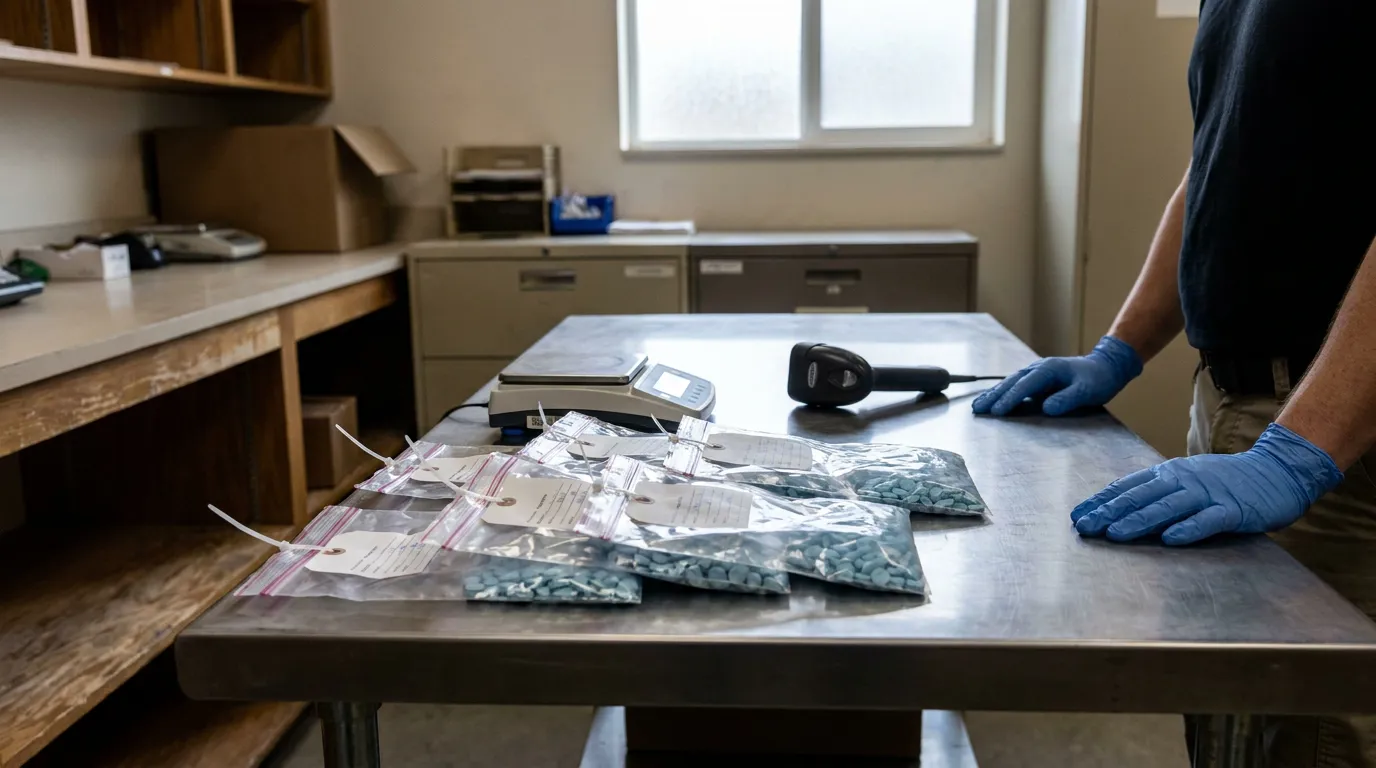
Key Takeaways: After Utah’s headline-making August 2026 seizure of roughly 204,000 fentanyl pills, prosecutors are pursuing aggressive felony distribution and trafficking charges tied to drug quantity. A drug dog sniff traffic stop in Utah is often the starting point for these cases, which makes search-and-seizure analysis critical. Fentanyl’s extreme potency drives harsh charging decisions, but potency alone does not prove knowledge or possession. Constitutional challenges, chain-of-custody scrutiny, and quantity disputes remain available defense avenues. Utah classifies fentanyl and its analogs as serious controlled substances, and penalties scale with the amount involved. Outcomes depend heavily on the specific facts of each stop, search, and arrest.
A single large seizure can reshape how an entire region handles drug prosecutions. Utah’s August 2026 fentanyl case, involving approximately 204,000 pills, has intensified law enforcement attention across Salt Lake County and the broader Wasatch Front. For anyone arrested, cited, or investigated in the aftermath, understanding how these cases begin and how they can be challenged is essential. This development matters because many fentanyl charges in Salt Lake City originate not from long investigations but from routine roadside encounters that escalate quickly.

How Utah’s Controlled Substances Law Frames Fentanyl Charges
Utah prosecutes fentanyl offenses under the state’s Controlled Substances Act, codified in Title 58, Chapter 37. This framework classifies drugs into schedules, defines prohibited conduct, and sets penalty tiers based on the substance and the amount involved. Fentanyl and its analogs are treated as serious scheduled substances. While a first or second simple-possession offense is often charged as a class A misdemeanor, production, distribution, and possession with intent to distribute generally fall in the felony range, and trafficking-level quantities are charged as a first-degree felony under a separate statute.
The core prohibited acts appear in the statute’s central penalty provision. Under the prohibited acts and penalties statute, offense severity generally scales with drug type and schedule, and quantity can trigger separate, more serious charging theories. Utah defines a "trafficking amount" of fentanyl as 100 grams or more of any composition or mixture, including pills, containing fentanyl or a fentanyl-related substance, and trafficking that amount is a first-degree felony. A seizure measured in the hundreds of thousands of pills would far exceed that threshold, which is precisely why prosecutors may pursue trafficking-level allegations. That said, the statute sets out elements the state must prove, and each element is a potential point of contention.
Quantity thresholds do not eliminate the prosecution’s burden of proof. In many cases, the state must still establish knowing possession, control, or intent, not merely proximity to a large stash. Courts recognize that presence near contraband, standing alone, does not automatically establish constructive possession. This distinction is often central to controlled substance defense in Utah.
The Roadside Reality: A Salt Lake City Hypothetical
Consider a driver heading south on I-15 through Salt Lake City who is pulled over for a minor equipment violation. During the stop, an officer calls for a K-9 unit, and a drug dog sniff traffic stop in Utah leads to a search that uncovers a sealed package in the trunk. The driver insists they had no knowledge of the contents and were simply transporting a borrowed vehicle. Within hours, that person is facing felony fentanyl distribution allegations tied to the broader August 2026 fentanyl case narrative.
This scenario reflects how quickly a life can change during an ordinary encounter. The accused may have no criminal history, no knowledge of the package, and no intent to distribute anything. Yet the sheer number of pills involved can drive prosecutors toward severe charging decisions. For defendants in this position, early legal analysis of the stop and search is often the most important step.
Why The Search Itself May Be The Strongest Defense
The Fourth Amendment governs whether evidence from a drug dog sniff traffic stop in Utah can be used at all. A stop must be lawful at its inception, and its duration generally cannot be extended beyond the original purpose without reasonable suspicion. If officers prolonged the stop to wait for a K-9 without adequate justification, the resulting search may be subject to a suppression challenge.
Several recurring issues arise in these cases. A criminal defense attorney in Utah reviewing a fentanyl arrest will often examine:
- Whether the initial traffic stop was supported by a valid, articulable reason
- Whether the stop was unlawfully extended to allow a dog sniff
- Whether the K-9’s reliability, training records, and alert were properly documented
- Whether the search scope exceeded what any alert or consent authorized
- Whether the substance was correctly identified, weighed, and preserved
Chain-of-custody and lab analysis deserve equally close scrutiny. The state must reliably connect the seized substance to the defendant and confirm its identity as fentanyl. Gaps in handling, labeling, or testing can undermine the prosecution’s quantity theory, which is significant when penalties hinge on the amount alleged. These are fact-dependent issues, and results vary from case to case.
Quantity, Potency, And The Push For Harsher Charges
Fentanyl’s pharmacology helps explain why prosecutors treat these seizures so seriously. As described in a widely cited clinical overview of fentanyl pharmacology, the drug is a synthetic opioid far more potent than morphine, with rapid onset and a high overdose risk. Because of that potency, even modest quantities can represent a large number of potential doses, which prosecutors may emphasize when arguing for trafficking-level treatment.
Potency, however, is a medical fact, not proof of a defendant’s mental state. The severity of the substance does not relieve the state of proving the required mental state and, for distribution or trafficking charges, intent under the controlled substance statutes. Defense analysis frequently separates the alarming headline number from the actual evidence tying a specific person to distribution conduct. In many cases, that gap between quantity and culpability is where negotiation leverage develops.
Charge reduction remains a realistic subject of discussion in appropriate cases. Depending on the facts, defense counsel may explore whether a serious allegation can be narrowed, and readers can learn more about how a fentanyl distribution defense might approach reducing exposure. Any such outcome depends on the strength of the state’s evidence, procedural posture, and individual circumstances, and no result is guaranteed.
Practical Steps If You Are Facing Fentanyl Charges
The choices made in the first days after an arrest can shape everything that follows. Preserving your rights early helps protect potential suppression arguments and other defenses. Practical, defense-minded steps generally include the following.
Protect Your Rights At The Scene And After
Silence and restraint are usually your allies. You are generally not required to answer investigative questions beyond basic identification, and you may decline to consent to searches. Politely asserting the right to counsel is often wiser than attempting to explain your way out of a serious accusation.
Document Everything You Remember
Details fade quickly, so write them down. Note the reason given for the stop, how long it lasted, when the K-9 arrived, and what officers said. This record can help counsel evaluate whether a drug dog sniff traffic stop in Utah complied with constitutional limits.
Understand Related Immunity Limits
Good Samaritan overdose protections rarely apply to large seizures. Those laws generally offer limited immunity for certain possession-related offenses when someone seeks emergency medical help, not for distribution or trafficking-level conduct. For anyone facing felony fentanyl allegations, that carve-out is unlikely to provide relief, and counsel can explain how state and public-health frameworks interact.
How Does This Impact Me?
What Does The 204,000-Pill Seizure Mean For My Case?
It generally means heightened scrutiny, not automatic guilt. High-profile seizures can influence charging attitudes across Salt Lake County drug charges, but the state must still prove every element against you individually. Your case turns on your specific facts, not the headlines.
Can The Traffic Stop Or Dog Sniff Be Challenged?
In many cases, yes, subject to the facts. If the stop was unlawful or improperly extended for a K-9, evidence may be challenged through a suppression motion. Success is never certain and depends on documentation, testimony, and the court’s assessment.
Does Fentanyl’s Potency Automatically Make This Trafficking?
No, potency alone does not establish intent to distribute. Under Utah law, trafficking generally turns on quantity, 100 grams or more of a fentanyl mixture, along with the required conduct, while potency and quantity do not by themselves prove knowledge or intent. Understanding the elements of fentanyl possession defense Utah helps clarify what the state actually must prove.
How Long Does The State Have To File Charges?
Criminal filing deadlines are set by statute and are interpreted narrowly. Utah’s courts provide general guidance on how these timelines work, and any tolling or extension applies only in limited circumstances rather than automatically. A lawyer can assess how applicable deadlines affect your situation.
What Should I Do Next?
Seek defense-focused legal guidance before speaking further with investigators. Early review of your stop, search, and the evidence can preserve options. Time-sensitive procedural rights can be lost if you wait too long to act.
The Bottom Line For Utah Defendants
A dramatic seizure does not change the fundamentals of criminal defense. The government still carries the burden of proof, the Constitution still governs how evidence is gathered, and quantity allegations still require reliable proof of identity, weight, and culpability. For individuals swept up after Utah’s August 2026 fentanyl developments, disciplined case analysis often reveals meaningful challenges. Every outcome depends on the particular facts, and nothing here should be treated as individualized legal advice.
If you or a loved one is facing fentanyl allegations, informed guidance can help you understand your options. The team at Nix Law reviews the details of each stop, search, and charge with a defense-first focus. Call 385-444-2442 or contact us today to discuss how these developments may affect your situation.