Why the 15-Minute Wait Before a Utah Breath Test Matters
Key Takeaways: In practice, Utah police generally must watch you for 15 minutes before a breath test, but the rule comes from Department of Public Safety (DPS) standards rather than the text of a Utah statute. The observation period helps make sure that burping, vomiting, or something in your mouth does not raise the breath reading with mouth alcohol. Under Utah Code § 41-6a-515(3), breath results are presumed valid only when DPS standards and record requirements are met, and a Baker challenge targets that presumption. A missed observation period usually does not get the result thrown out automatically in a criminal case. Instead, the state may have to prove the test was reliable in some other way. Prosecutors may also rely on blood tests, officer observations, or field sobriety results, so a careful review of video, logs, and testing procedures matters.
In practice, Utah officers generally do need to watch you before a breath test, but the requirement does not come from the statute itself. Utah’s DUI laws direct the Department of Public Safety (DPS) to set standards for how breath tests are given and read. The 15-minute observation period is part of those standards. If an officer skips or cuts short the observation period, the breath result may become open to challenge. That does not automatically get the result thrown out, so it helps to know how this rule works and where its limits are.
If you were arrested after a breath test in Salt Lake City, acting quickly can protect your options. The team at Nix Law reviews breath test procedures, police reports, and machine records to look for errors. Call 385-444-2442 or contact us now to talk about your case.
Where the Observation Requirement Comes From
The 15-minute observation period comes from DPS standards, not from the text of a Utah statute. Under Utah Code § 41-6a-515, the DPS commissioner must set standards for giving and reading chemical analysis of a person’s breath or oral fluids, including training standards. The legislature left the step-by-step procedure to the agency, so the details of the observation period are found in the administrative standards.
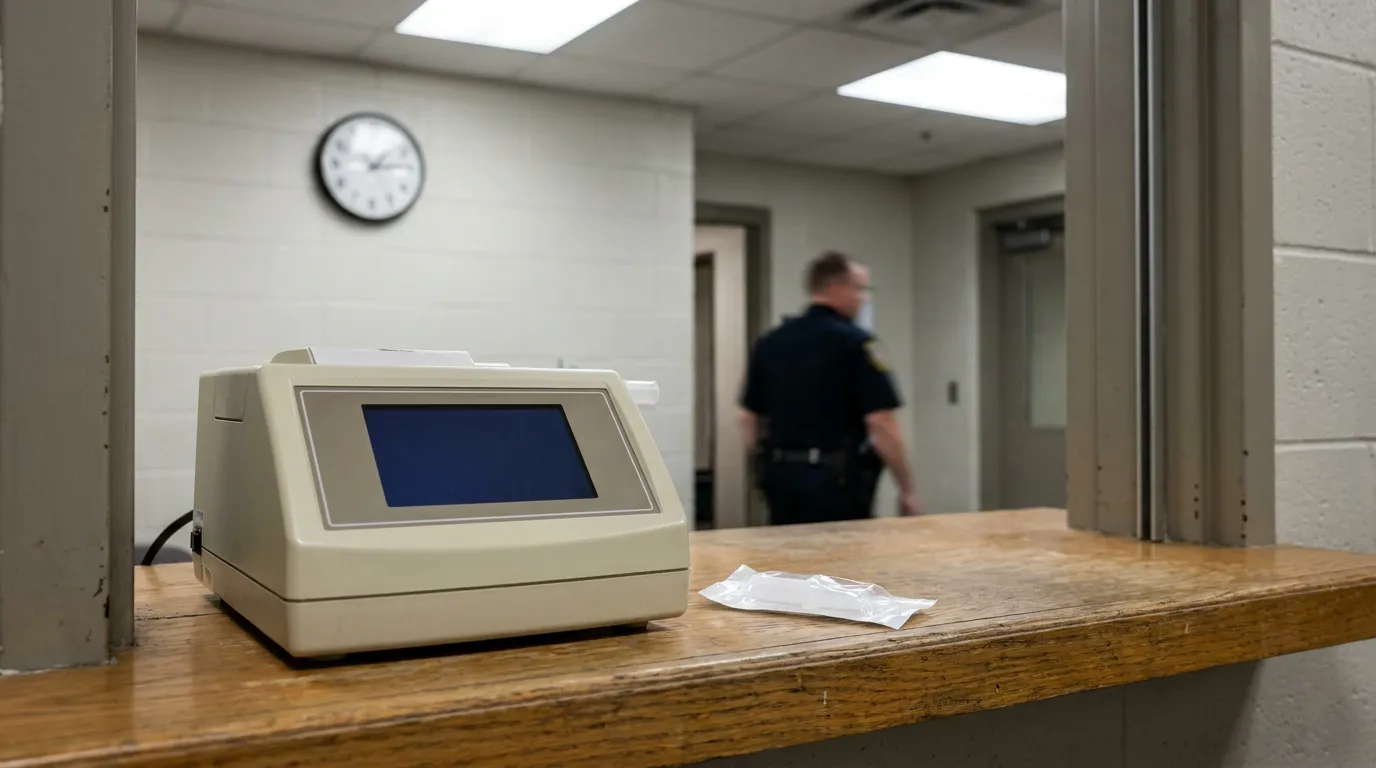
The observation period exists for a scientific reason. Breath machines estimate alcohol in deep lung air. Burping, vomiting, or putting something in your mouth during the waiting period may bring alcohol from the mouth or stomach into the sample and push the reading up. A properly run observation period helps make sure the machine measures what it is supposed to measure.
Why Accurate Testing Carries So Much Weight
Utah defines DUI partly by a chemical test result, so test accuracy can play a major role in a case. Utah Code § 41-6a-502 bars operating or being in actual physical control of a vehicle with a breath or blood alcohol concentration of.05 grams or greater, either as shown by a subsequent chemical test at the time of the test or as the person’s blood alcohol concentration was at the time of operation or actual physical control. Since December 30, 2018, that limit has been.05 grams or greater, down from the earlier.08 limit. A small error near the limit may mean the difference between a per se violation and none, although the state may still try to prove impairment in other ways.
Implied Consent and the Officer’s Duty to Test
By driving in Utah, you are considered to have agreed to chemical testing. Under Utah Code § 41-6a-520(1)(a), a driver consents to tests of breath, blood, urine, or oral fluids to determine alcohol content, impairment, or the presence of a measurable controlled substance. The test must be given at the direction of an officer who has grounds to believe the person violated a covered DUI-related offense. Testing under implied consent still generally has to be done correctly, including following DPS procedures.
How a Baker Challenge Targets the Presumption of Validity
A Baker challenge attacks the shortcut the state usually relies on to admit breath results. Under Utah Code § 41-6a-515(3), if a judge finds that the DPS standards and the record requirements were met, the breath result is presumed valid and the state needs no further foundation. Defense lawyers try to defeat this presumption by showing the officer did not follow required procedures, such as the observation period.
Prosecutors usually try to earn the presumption through routine records. Under § 41-6a-515(2), calibration logs, maintenance records, and test records may be admitted to show the test was done and the instrument was accurate. A judge must first find those records were made in the regular course of the investigation at or near the time of the event, and that their source and preparation appear trustworthy. Gaps, inconsistencies, or late entries may give the defense room to argue.
Common Observation Period Problems
Some procedural issues come up again and again in breath test cases. Depending on the facts, a review might focus on:
- An officer who started the 15-minute clock before ending the roadside investigation
- Observation done while the officer was driving, filling out paperwork, or facing away
- No record of burping, regurgitation, or anything in the mouth during the wait
- Time stamps on the test record that do not line up with body camera footage
- Missing or questionable calibration and maintenance records
💡 Pro Tip: Body camera and booking room video often carry time stamps. Comparing that footage to the breath machine’s printout may show whether the full observation period actually happened.
Breathalyzer Accuracy vs Blood Test: What Happens if the Breath Result Is Challenged
Even a successful attack on the breath result does not end the state’s evidence in most cases. Utah Code § 41-6a-516(2) lets courts receive other admissible evidence of a defendant’s alcohol or drug level at the relevant time. If the breath result is weakened, prosecutors may turn to a blood draw, officer observations, or field sobriety results. You can read more about how Salt Lake City DUI lawyers challenge breathalyzers in our related article.
Breath and blood tests come with different strengths and weaknesses. The table below gives a general overview, and how each plays out depends on the facts of a case.
| Issue | Breath Test | Blood Test |
|---|---|---|
| What it measures | Alcohol estimated from breath | Alcohol measured directly in blood |
| Key procedure | Observation period, calibrated instrument | Proper draw, storage, chain of custody |
| Common challenges | Mouth alcohol, skipped observation, calibration | Contamination, labeling, lab handling |
| Presumption under § 41-6a-515 | Available if DPS standards are met | Not covered; foundation usually laid through lab and draw witnesses |
Does a Missed Observation Period Get the Result Thrown Out?
Generally, no, at least not automatically in a criminal case. Under Utah Code § 41-6a-516, failing to follow the implied consent procedures in § 41-6a-520 does not by itself make a chemical test result inadmissible in a criminal case. A missed DPS observation period usually affects the § 41-6a-515 presumption and not admissibility as such. In many cases, it means the state loses its automatic presumption and has to prove reliability some other way.
Losing the presumption can still make a real difference. Without it, the prosecution may need expert or other witnesses to lay a foundation, explain how the instrument works, and show the result is reliable despite the procedural gap. If the state cannot do that, the court may exclude the result. That may give the defense more chances to cross-examine and raise reasonable doubt. Under § 41-6a-516(1)(a), properly authorized test results are admissible in civil and criminal DUI proceedings, so the fight usually centers on foundation and weight.
Building a DUI Defense Around Testing Procedures
A strong DUI defense usually looks at the whole case and not only the observation period. A lawyer may examine whether the stop was lawful, whether there were grounds to arrest and request a test, and whether the breath or blood evidence holds up. Working with an experienced breathalyzer accuracy vs blood test lawyer can help you see which issues matter most in your situation.
Your driver license case runs on a separate track from the criminal case. The Driver License Division process is administrative and has a short deadline. Generally, you must request a hearing within 10 calendar days of the arrest, and missing that window may cost you the chance at a hearing. A hearing may also provide early testimony about how the test was given.
💡 Pro Tip: Write down everything you remember about the time before your breath test, including whether you burped, coughed, or were left alone. Details fade quickly, and your notes may help your lawyer compare your account with the officer’s report.
Frequently Asked Questions
1. Is the 15-minute observation period written into Utah’s DUI statutes?
No. Utah Code § 41-6a-515(1) directs the DPS commissioner to set breath testing standards, and the observation period is part of those standards.
2. Will my breath test be suppressed if the officer skipped the observation period?
Not necessarily. A skipped observation period usually means the state may lose its presumption of validity under § 41-6a-515(3) and have to show reliability another way. If the state cannot lay an adequate foundation, the court may exclude the result.
3. What is a Baker challenge?
The term generally refers to a defense challenge to the presumption of validity under Utah Code § 41-6a-515(3). The name traces back to the Washington case State v. Baker, 355 P.2d 806 (Wash. 1960), which established the foundational requirement that an officer observe a DUI suspect for a period before a breath test. Utah courts, including in State v. Vialpando, 2004 UT App 95, adopted this framework and set the observation period at fifteen minutes. The defense argues that DPS standards or record requirements were not met, so the result should not get automatic weight.
4. Can the prosecution use a blood test if my breath test is challenged?
It may. Utah Code § 41-6a-516(2) allows courts to receive other admissible evidence of your alcohol level at the relevant time, which can include a blood test.
5. Does refusing a test avoid these issues?
No. Refusal can carry its own consequences under Utah’s implied consent laws, including license revocation, and may be used as evidence in court. It also raises separate legal questions worth discussing with a lawyer.
Protecting Your Rights After a Utah Breath Test
The 15-minute observation period is a DPS requirement that can affect how much weight a Utah breath test receives. If officers skip it, the state may lose its presumption of validity and have to prove reliability on its own. A missed observation period does not guarantee dismissal, and prosecutors may rely on blood tests or other evidence. A careful review of video, logs, and procedures may show where the state’s case is weak.
If a breath or blood test is part of your DUI case, getting answers early can help. Nix Law defends people throughout Salt Lake City and the surrounding counties. Call 385-444-2442 or schedule your consultation today.
Disclaimer: This content is for informational purposes only and is not legal advice. Every case is unique, and results may vary. Consult an attorney about your specific circumstances.