
What an Intent to Distribute Marijuana Charge Can Mean in Utah
Key Takeaways: An intent to distribute marijuana charge in Salt Lake City is usually a felony-level accusation, far more serious than simple possession of a small amount, which is generally a class B misdemeanor. Producing, dispensing, or possessing marijuana with intent to distribute is generally a third degree felony with up to five years in prison and a fine of up to $5,000. Possessing 100 pounds or more is generally a second degree felony carrying 1 to 15 years, even without proof of intent. Prosecutors often try to prove intent with circumstantial evidence such as quantity, packaging, scales, and cash. Enhancements can apply near schools, parks, churches, and libraries, or in the presence of minors. A conviction can affect employment, housing, and firearm rights long after any sentence ends. Defenses such as unlawful searches, constructive possession disputes, chain-of-custody gaps, and weak evidence of intent may lead to reduced charges or dismissal.
An intent to distribute marijuana charge in Salt Lake City is generally a felony-level accusation that can carry prison exposure, significant fines, and a lasting criminal record. Simple possession of a small amount is usually a misdemeanor, while distribution-related offenses are treated much more harshly. The classification can depend on how much marijuana is involved, where the alleged offense happened, and whether you have prior convictions.
If you or someone you love is facing a marijuana distribution accusation, the defense team at Nix Law can review the facts and explain your options. Call 385-444-2442 to talk about your situation, or contact us now to schedule a confidential consultation.
Where the Possession With Intent to Distribute Utah Code Provisions Live Today
Utah’s possession with intent to distribute offense now appears at Utah Code § 76-18-210. That section, titled "Unlawfully possessing a controlled substance or counterfeit substance with intent to distribute," covers marijuana. Older articles, police reports, and court records may still cite the former provisions in Title 58, Chapter 37, the Utah Controlled Substances Act. Before the 2026 recodification, enacted via H.B. 301 and effective May 6, 2026, Utah Code § 58-37-8 set out the prohibited acts and their penalties.
You can read the current intent to distribute statute on the Utah State Legislature’s website. Penalty structures from older versions of the code may no longer apply. The version of the law in effect when the alleged offense happened generally controls, and your attorney can help determine which version governs your charges.
How Prosecutors Try to Show "Intent"
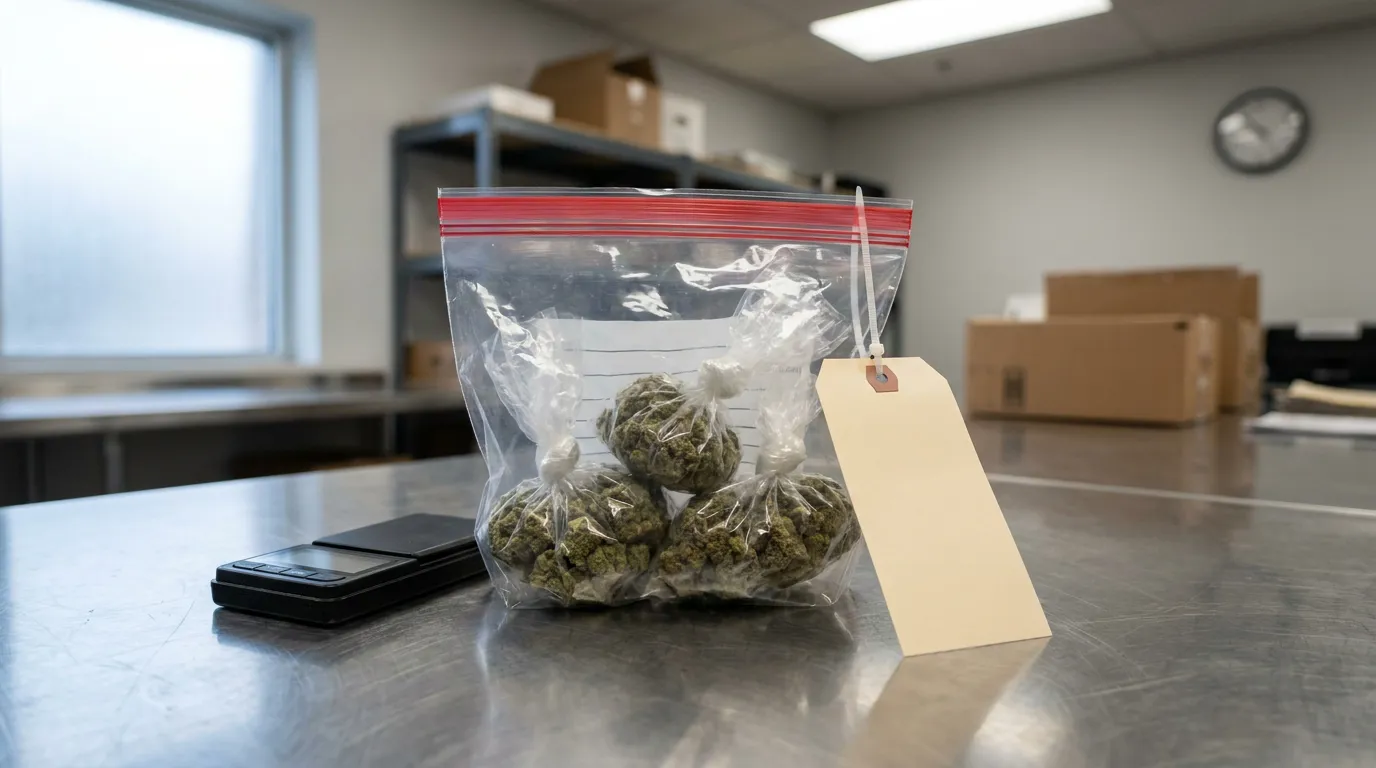
Prosecutors rarely have direct proof of what a person planned to do with marijuana, so they often rely on circumstantial evidence. Common indicators include:
- Quantity larger than what a person might reasonably use
- Packaging in multiple small bags or containers
- Digital scales or other measuring tools
- Large amounts of cash in small denominations
- Text messages or call logs that police interpret as sales activity
None of these factors automatically proves intent to distribute. Many people buy in bulk, own kitchen scales, or carry cash for legitimate reasons. Courts look at the totality of the circumstances, and the prosecution must prove every element beyond a reasonable doubt.
How Penalties for Marijuana Intent to Distribute Utah Charges Compare
The penalty gap between possession and distribution-type offenses in Utah can be significant. Under Utah Code § 76-18-207, simple possession of less than one pound of marijuana is generally a class B misdemeanor. Larger amounts below 100 pounds can be charged at higher levels. A repeat possession conviction can rise to a class A misdemeanor on a third conviction and a third degree felony on a fourth, but generally only if each earlier conviction involved an offense committed within seven years.
Producing, manufacturing, or dispensing marijuana is generally a third degree felony under Utah Code § 76-18-208, and a second or later conviction may become a second degree felony. Possession with intent to distribute under Utah Code § 76-18-210 is likewise generally a third degree felony, and repeat convictions can carry a higher classification.
| Offense | Typical Classification | Maximum Prison Term | Maximum Fine (Individual) |
|---|---|---|---|
| Simple possession (smaller amounts) | Class B misdemeanor | Up to 6 months in jail | $1,000 |
| Possession, third conviction (within 7 years) | Class A misdemeanor | Up to 364 days in jail | $2,500 |
| Producing or dispensing marijuana | Third degree felony | Up to 5 years | $5,000 |
| Possession of 100 pounds or more | Second degree felony | 1 to 15 years | $10,000 |
Prison Exposure and Fines
Under Utah Code § 76-3-203, a third degree felony generally carries a prison term of up to five years, and a second degree felony generally carries an indeterminate term of 1 to 15 years, unless another statute provides otherwise. These are maximums. Many cases end with probation, a reduced charge, or a lesser sentence depending on criminal history, plea negotiations, and mitigating facts.
Fines also generally climb with each classification level. Under Utah Code § 76-3-301, an individual may be fined up to $5,000 for a third degree felony and up to $10,000 for a first or second degree felony. Class A and class B misdemeanor fines generally max out at $2,500 and $1,000. Surcharges can add to the total.
Why 100 Pounds of Marijuana Changes Everything
Quantity alone can push a case into second degree felony territory in Utah. Under Utah Code § 76-18-207, possessing 100 pounds or more of marijuana is generally a second degree felony, even without proof of intent to distribute. The prosecution still has to prove knowing possession and the weight.
Weight disputes can matter a great deal. Questions about whether stems, packaging, or moisture were included in the measurement may affect how a charge is classified. For a deeper look, see our guide on 100 pounds marijuana Utah penalties and defenses.
💡 Pro Tip: Ask your attorney to request the lab report and weighing documentation early.
Enhancements That Can Raise the Stakes in Salt Lake City
Utah law allows a possession with intent to distribute charge to be enhanced based on where or around whom the alleged offense happened. Under Utah Code § 76-18-204, enhancements, which generally raise the offense by one degree, may apply when the offense occurs:
- In or on the grounds of a school between 6 a.m. and 10 p.m., or a preschool or child-care facility
- In a public park, amusement park, arcade, or recreation center
- In a house of worship or a library
- Within 100 feet of any of those places
- In the presence of anyone under 18, wherever the offense happens
- When drugs are supplied to an inmate or a correctional facility
Salt Lake City contains many schools, parks, churches, and libraries, so this exposure is common. A traffic stop or apartment search may fall within one of these zones without the accused person knowing it. Not knowing the location is generally not a defense, but measurements, timing, and the nature of a location may still be challenged.
Third Degree Felony Marijuana Utah Charges and Your Record
A felony conviction can follow you long after any sentence ends. It may affect employment, housing, professional licenses, and firearm rights. Expungement may be possible later, but eligibility rules apply and waiting periods vary.
What Happens After an Arrest
After an arrest, a judge typically decides whether you may be released and under what conditions. Utah Code § 77-20-205.5 sets default financial conditions, often called bail, of $5,000 for a third degree felony and $10,000 for a second degree felony. Judges may set different conditions, including release without money bail or detention.
The early days of a case can shape much of what follows. Statements made to police, consent given for searches, and missed court dates can all create problems. Speaking with a defense attorney before answering questions is generally the safest approach.
💡 Pro Tip: Write down everything you remember about the stop or search as soon as possible, including times, officer statements, and whether you were asked for consent. Share these notes only with your attorney.
Building a Defense Under the Possession With Intent to Distribute Utah Code
A strong defense often starts with examining how police found the marijuana. If officers conducted an unlawful search or seizure, a court may suppress the evidence, subject to recognized exceptions. Without that evidence, the prosecution’s case may weaken significantly or fall apart.
Common Defense Strategies
Other defenses focus on possession, knowledge, and the reliability of the evidence. Shared cars and homes can raise real questions about constructive possession and whether you knew the marijuana was there. Chain-of-custody gaps, lab errors, and weak circumstantial evidence of intent may also support reduced charges or dismissal. Utah’s medical cannabis laws generally do not protect distribution outside the licensed system. Plea negotiations or diversion options may also be available.
Public opinion in Utah has shifted, but the criminal law has not kept pace. A Utah marijuana opinion poll from the Libertas Institute indicates that a majority of Utahns support some form of legalization or decriminalization. Even so, recreational marijuana is still illegal in Utah, and prosecutors continue to treat distribution-related offenses seriously.
Frequently Asked Questions
1. Is intent to distribute marijuana a felony in Utah?
In most cases, yes. Possession with intent to distribute marijuana under Utah Code § 76-18-210, like producing or dispensing it under § 76-18-208, is generally a third degree felony. Prior convictions or enhancements can raise the classification.
2. Can police charge intent to distribute without seeing a sale?
Yes, prosecutors often rely on circumstantial evidence. Quantity, packaging, scales, and cash are common examples. These factors may be challenged, and the state must still prove intent beyond a reasonable doubt.
3. What if I had 100 pounds or more?
Possessing 100 pounds or more of marijuana is generally a second degree felony under Utah Code § 76-18-207. Proof of intent to distribute is generally not required at that weight. The potential prison term is 1 to 15 years under Utah Code § 76-3-203.
4. Can my charge be enhanced near a park or school?
Under certain circumstances, yes. Utah Code § 76-18-204 allows enhancements for offenses in or within 100 feet of schools, parks, churches, libraries, and similar places, or in the presence of minors. Whether an enhancement applies depends on the specific facts.
5. Will I have to pay bail?
Possibly. Utah Code § 77-20-205.5 sets default amounts of $5,000 for a third degree felony and $10,000 for a second degree felony. Judges may change release conditions based on the case.
Protecting Your Future After a Marijuana Distribution Accusation
An intent to distribute marijuana charge in Salt Lake City is serious, but an accusation is not a conviction. Felony classifications, enhancements, and quantity thresholds can raise your exposure quickly, but unlawful searches, weak evidence of intent, and possession disputes may create defense opportunities. If you want to learn more about related charges, a possession with intent to distribute Utah Code lawyer can also explain how simple possession cases are handled.
The team at Nix Law is ready to review your case and help you protect your rights. Call 385-444-2442 today, or schedule your consultation to start building your defense.
Disclaimer: This content is for informational purposes only and is not legal advice. Every case is unique, and results may vary. Consult an attorney about your specific circumstances.