
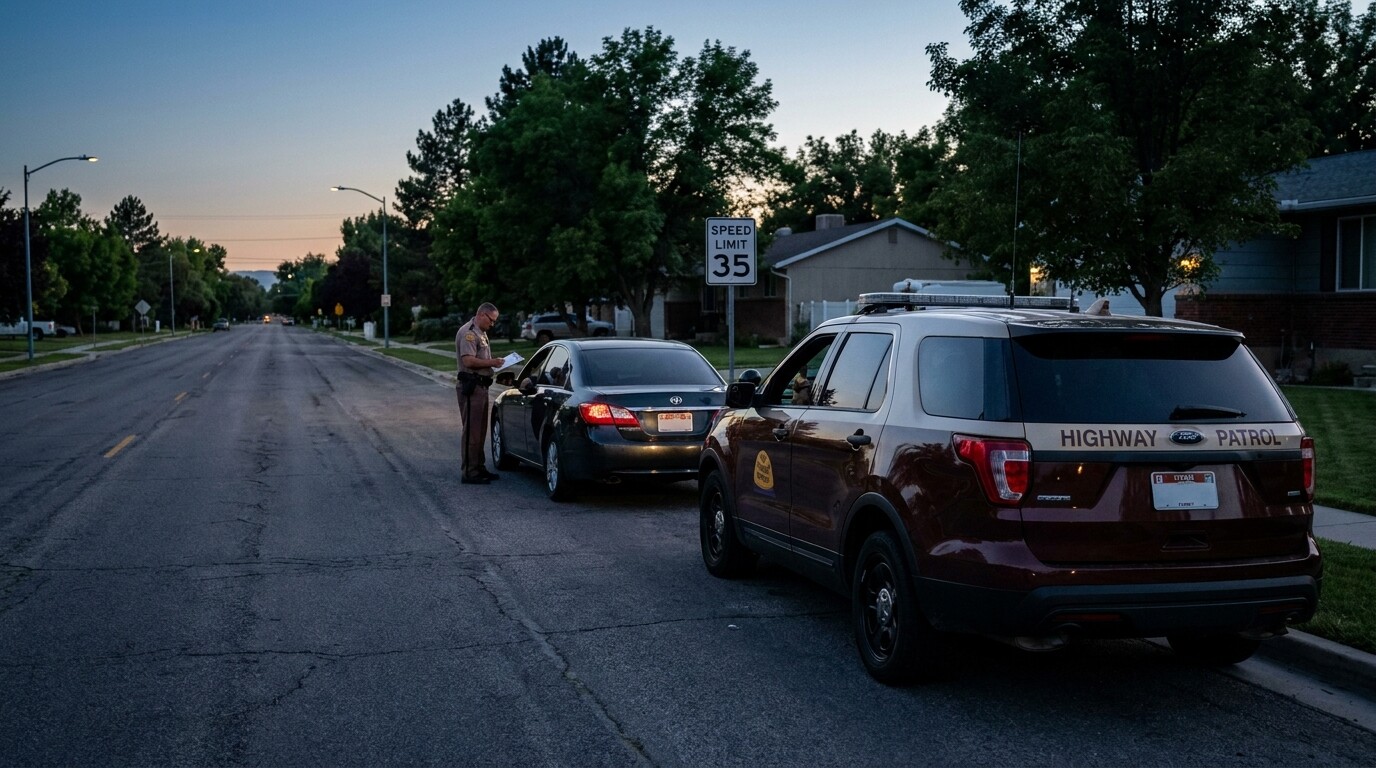
Utah’s newest statewide DUI data and related 2026 legal developments make one point clear: a DUI case in Salt Lake City is rarely "routine." The Utah Commission on Criminal and Juvenile Justice’s 2025 DUI Annual Report says Utah courts disposed of 12,099 DUI-related cases in FY 2025, while the Utah Driver License Division continues to warn arrestees that they must request a DLD hearing within 10 days and may lose driving privileges 45 days after arrest. (justice.utah.gov) For someone in Salt Lake City, Utah, that combination matters immediately. A charging decision, license issue, and negotiation choice can all start moving before you understand whether fighting the case, seeking a reduction, or exploring a plea in abeyance Utah option is in your best interest.
Why recent Utah DUI developments matter to the defense side
The most important background point is that Utah’s DUI system is both criminal and administrative at the same time. The criminal case plays out in court, but the Driver License Division process has its own deadline and consequences, meaning a person can make a damaging delay before the first court date. The DLD states that a DUI arrestee must request a hearing within 10 days, and driving privileges may be withdrawn 45 days after arrest if action is taken. (dld.utah.gov)
The statewide data shows how common DUI litigation remains in Utah courts. According to the 2025 DUI Annual Report, Utah recorded 10,923 DUI-related arrests in FY 2025, down 5% from FY 2024, and Salt Lake County accounted for 3,663 arrests, about 34% of the statewide total. The report says a first DUI offense is generally classified as a Class B misdemeanor, a second DUI offense within 10 years is classified as a Class A misdemeanor, certain aggravating facts can raise a first offense to a Class A misdemeanor, and a third or subsequent DUI within 10 years can be charged as a third-degree felony. (justice.utah.gov)
That matters because plea decisions are not just about "getting it over with." Utah appellate litigation in 2026 has highlighted how DUI charging level and court forum can affect procedure. In Ramirez v. Hon. Landau, the Utah Court of Appeals addressed a defendant who actually completed a guilty plea and was sentenced in justice court on a class B misdemeanor DUI charge; the justice court later dismissed the case and a related class A misdemeanor DUI charge proceeded in district court where Ramirez also pled guilty. The Court of Appeals dismissed Ramirez’s petition for extraordinary relief as moot, underscoring that plea mechanics — including the interplay between justice court and district court proceedings — can become complicated in Utah DUI cases.
A Salt Lake City example that feels uncomfortably real
Imagine a first-time professional driver in Salt Lake City arrested after a late-night stop who later learns the prosecutor is treating the case seriously because of test results and work-related driving concerns. He is worried about his CDL, insurance, and whether a fast deal will solve the problem. He has heard the phrase plea in abeyance Utah from friends and online discussions, but does not yet know whether that resolution is available, strategically sound, or likely to create downstream problems for expungement, licensing, or employment.
Now add Utah’s low BAC threshold and the pressure grows. Utah remains the only state in the nation with a 0.05% BAC limit for drivers 21 and older, a per se standard meaning that BAC level alone is sufficient evidence for a charge, regardless of whether driving appeared impaired. The Utah Highway Safety Office reports that the average BAC among alcohol-related DUI arrestees in FY 2025 was 0.14, nearly three times the legal limit, and that alcohol-related crashes are 15.1 times more likely to result in a death than all other crash types. In that setting, a person may feel pushed toward any offer that sounds like compromise, even when the real first question should be whether the stop, arrest, testing, and paperwork can be challenged. (highwaysafety.utah.gov)
What a plea in abeyance Utah option can mean in a DUI case
A plea in abeyance Utah arrangement is not the same as a dismissal on day one, and it is not automatically the best defense outcome. The 2025 DUI Annual Report counts pleas in abeyance among "guilty-equivalent" case outcomes for reporting purposes, a reminder that prosecutors, courts, and collateral-consequence systems may treat the resolution differently than expected. (justice.utah.gov)
That distinction is especially important for readers searching for a plea in abeyance Utah answer after a fresh arrest. In practice, the right analysis usually begins with questions such as whether the officer had legal grounds for the stop, whether field sobriety or chemical testing was handled correctly, whether body-camera or dash-camera footage supports the report, and whether a timely DLD hearing request can protect driving privileges while the case is being evaluated. A negotiated result can be useful in some cases, but should come after that defense review, not before.
Why "quick resolution" can still carry long-term consequences
Even when a negotiated outcome sounds favorable, it may not solve every problem attached to a DUI arrest. Utah Courts’ expungement guidance states that, as of January 1, 2026, the law changed how courts identify cases for automatic expungement, and specifically notes that a DUI may not qualify for automatic expungement in the same way lower-level non-DUI matters sometimes do. The guidance also warns that dismissals tied to plea in abeyance treatment can require close attention to how the case was resolved and whether a further motion to dismiss is needed. (utcourts.gov)
That means a person should ask not only "Can I get a deal?" but also "What exactly will this look like a year from now?" The answer may affect background checks, driving restrictions, professional licensing, and future charging exposure if another arrest happens. Outcomes depend heavily on the specific facts, the court, the prosecutor, and the exact language of the agreement.
The defense issues that should be reviewed before accepting any offer
Before anyone accepts a DUI resolution, the prosecution’s case should be tested rather than assumed. The most valuable work often happens early, before memories fade and administrative deadlines pass.
- The traffic stop itself may be challengeable. If the stop lacked reasonable suspicion, later evidence may face suppression arguments.
- Field sobriety evidence may be less reliable than it appears. Road conditions, lighting, footwear, fatigue, medical issues, and officer instructions can all matter.
- Breath or blood testing issues may affect admissibility. Timing, maintenance, chain of custody, and collection procedures can become central.
- The DLD hearing deadline is separate from the court case. Missing the 10-day request window can limit options on the license side even if criminal defense remains active.
- Aggravating facts can change exposure. Bodily injury, a child passenger, wrong-way driving, or prior history can alter charging level and negotiation leverage. (Utah DUI statutes)
Why recent policy changes also affect negotiation leverage
Utah’s 2026 legislative activity shows that plea-related rules are not static. A 2026 fiscal note for "Plea in Abeyance Amendments" states that the legislation could reduce justice court fee revenue because of reduced plea-in-abeyance fees and could reduce costs to individuals by about $100 per person beginning in FY 2027. That does not tell us whether a DUI defendant will receive a plea in abeyance, but it shows lawmakers are still actively shaping how these agreements function. (pf.utleg.gov)
Recent Utah court guidance also reinforces that labels can mislead. If a plea in abeyance is counted as a guilty-equivalent disposition in statewide DUI reporting, defendants should be careful about assuming the phrase means "no real consequence." That is one reason careful case-specific advice matters. (justice.utah.gov)
What Salt Lake City defendants should watch right now
For many Salt Lake County readers, the practical pressure points are time, records, and risk management. Salt Lake County represented roughly one-third of Utah’s DUI-related arrests in FY 2025, so local courts and prosecutors handle these matters at scale. That volume can make early preparation more important, not less. (justice.utah.gov)
A sensible early checklist often includes:
- preserving receipts, messages, ride-share data, and witness names;
- identifying possible video sources quickly;
- requesting or preparing for the DLD hearing within 10 days;
- avoiding assumptions about BAC printouts or officer narratives; and
- evaluating whether negotiation, motion practice, or trial preparation offers the strongest protection. (dld.utah.gov)
Readers who want more Utah-specific defense context can review Utah DUI defense information and explore recent Utah DUI articles for broader background. Those resources are no substitute for legal advice, but they can help frame questions to ask after an arrest.
How Does This Impact Me?
What does this mean for my DUI case in Salt Lake City?
It means you should not assume your case is minor because it is a first offense. Utah generally treats a first DUI as a Class B misdemeanor and a second DUI within 10 years as a Class A misdemeanor, but aggravating facts can raise the level, and separate DLD consequences can begin quickly. (justice.utah.gov)
Does this change my deadline to protect my license?
The recent reporting does not change the DLD’s stated 10-day hearing request deadline after a DUI arrest. The administrative deadline remains separate from the court case, so action may be needed quickly even while deciding how to defend the criminal charge. (dld.utah.gov)
Is a plea in abeyance Utah result always better than going to trial or filing motions?
Not necessarily. A plea in abeyance Utah outcome may be useful in some cases, but can still carry meaningful consequences, and statewide DUI reporting treats plea in abeyance dispositions as guilty-equivalent. Whether it is better than litigation depends on the stop, the evidence, the terms offered, and the client’s licensing, employment, and record concerns. (justice.utah.gov)
Will a DUI or plea-based resolution automatically disappear from my record?
No one should assume that. Utah Courts explain that automatic expungement rules changed on January 1, 2026, and DUI cases may not qualify the same way some other offenses do; courts also note that plea-in-abeyance-related dismissals can require close procedural attention. (utcourts.gov)
What should I do next if I was just arrested?
The safest next step is to treat the case as time-sensitive and fact-specific. Preserve documents and witnesses, avoid making assumptions based on the citation alone, and get advice quickly on both the criminal case and the DLD side. Exceptions, deadlines, and collateral consequences can be interpreted narrowly, so individualized legal advice matters.
What this news-driven picture really suggests for Utah DUI defense
The latest Utah data does not say every DUI defendant should reject a deal, and it does not say every case should resolve through a plea in abeyance Utah agreement. It says something more practical: DUI cases in Utah move through a system shaped by fast administrative deadlines, evolving plea rules, and serious collateral consequences. In Salt Lake City, where case volume is high and the stakes often include driving privileges and employment, the better question is not "What is the fastest way out?" but "What is the most informed way forward?" (justice.utah.gov)
If this recent Utah DUI reporting raises questions about your own case, Nix Law may be able to help you understand the process and timing issues involved. You can call 385-444-2442 or contact us today to learn more about your options.