
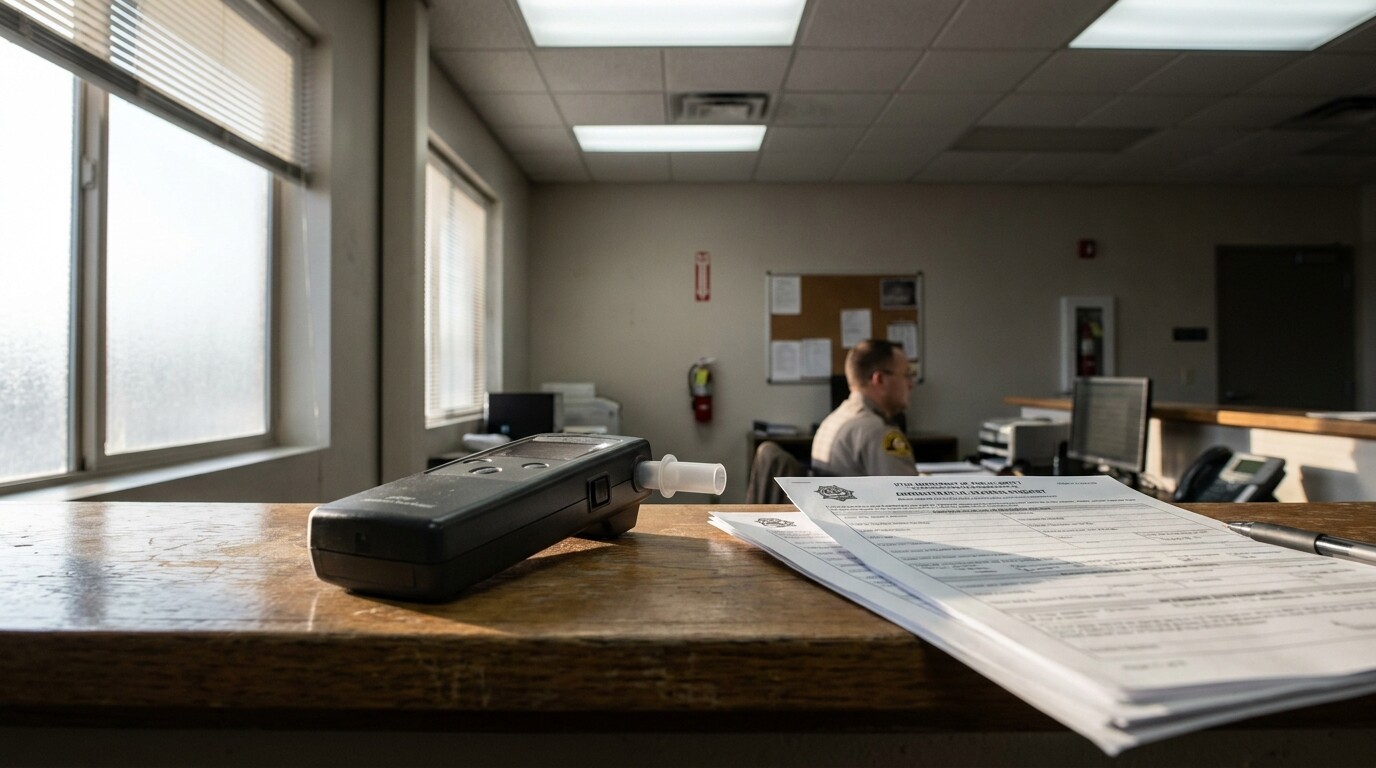
Understanding Your First DUI Stop in Utah
Key Takeaways: After a first DUI arrest in Salt Lake City, you have only 10 calendar days to request an administrative hearing with the Driver License Division, weekends and holidays count. Submit a written request online, by email, or by mail including your full name, date of birth, arrest date, mailing address, Utah license number, and preferred attendance method. This administrative process runs separately from your criminal case. You may continue driving for 45 days from arrest before privileges can be withdrawn. Missing the deadline can cost you your license before your criminal case is decided. Late requests require documentation and are never guaranteed. A first-offense conviction brings penalties including license suspension and ignition interlock restrictions. Acting quickly to submit and document your request is one of the most important early steps to protect your driving privileges.
A first DUI arrest in Salt Lake City sets two clocks ticking at once, and the faster one is administrative. After an arrest for driving under the influence, you have a narrow window to protect your driving privileges through the Driver License Division. You have 10 days to request a hearing. Missing that deadline can quietly cost you your license before your criminal case is decided.
This guide walks you through how the request works, what the form requires, and why acting quickly is critical in any dui utah first offense matter.
If you are facing a recent arrest and need help meeting the deadline, Nix Law is ready to assist. You can reach the team through the firm’s main website, call a Salt Lake City attorney directly at 385-444-2442, or send your details through the firm’s online contact page to start protecting your record.

Why the 10-Day DLD Hearing Deadline Matters
The single most time-sensitive task after an arrest is requesting your administrative hearing. You must request a hearing with the Driver License Division (DLD) within 10 days of your arrest. The governing regulation requires written submission within ten calendar days of the notice of arrest. Because the rule counts calendar days, weekends and holidays do not pause the clock.
This deadline is separate from anything that happens in criminal court. The administrative process is governed by Utah’s adjudicative rules for license matters. Rule R708-14 establishes procedures for alcohol/drug adjudicative proceedings. Treat the DUI hearing deadline in Utah as firm, courts and agencies interpret missed-deadline exceptions narrowly.
💡 Pro Tip: Mark the deadline on a calendar the day you are released, counting forward from the arrest date, so you never assume you have "a few extra days."
The Two Sides of a DUI Utah First Offense
Every DUI arrest in Utah moves along two separate tracks that resolve independently. The administrative side involves the Driver License Division. The criminal side involves the court in the county where you were arrested. The two tracks can interact, a dismissal or reduction of the criminal charge can affect the administrative suspension, but a favorable outcome on one side does not automatically control the other.
The Administrative Track
The administrative track focuses solely on your driving privileges. This is where the Utah Driver License Division hearing happens, and it is the only path to challenge a license withdrawal before it takes effect. You can continue to drive for 45 days from the date of arrest, after which your privileges may be withdrawn. Requesting a first DUI DLD hearing preserves your ability to contest that withdrawal.
The Criminal Track
The criminal track is handled by the court in the county of your arrest. It addresses the alleged violation itself, including plea negotiation or trial. The prosecution carries the burden of proof beyond a reasonable doubt, so this side often involves challenges to the stop, testing procedures, and evidence handling. For a broader overview, the team’s first offense DUI hearing resources explain the defense process in more detail.
💡 Pro Tip: Keep copies of every document you received at the scene or jail, including the notice of arrest, since the dates and citation details guide both tracks.
How to Submit Your DLD Hearing Request
Submitting your request correctly protects the deadline and avoids delays. The DLD offers both an online submission form (recommended) and a printable PDF form. You can begin directly through the agency’s Driver License Division hearing request page. After you submit, the Driver License Division will contact you to schedule a date and time.
Utah’s rule lists several delivery methods for written requests. The regulation provides that requests may be submitted online, by email to the division, or by mail to its Salt Lake City post office box. You can review the controlling text in the published version of Utah Admin Code R708-14-8.
Your written request must include specific identifying information to be complete. Under R708-14-8(1)(b)(i)-(vi), the request generally must contain:
- Your full legal name and date of birth
- The date of your arrest
- Your current mailing address
- Your Utah license number, if applicable
- Whether you will attend in person, telephonically, or by live audiovisual means
Submitting a late request is possible only under limited circumstances. When a request arrives after the ten-day window, late submission must include supporting documentation explaining: 1. Why your hearing request is late. 2. Why a late hearing should be granted. 3. Why you believe you will prevail at the hearing. Because agencies evaluate these requests strictly, a late filing should never be treated as a guaranteed second chance.
💡 Pro Tip: If you choose the online form, save the confirmation screen or email so you have proof of timely submission.
What Happens to Your License and Vehicle
Beyond the hearing, an arrest often affects your vehicle and short-term driving status. Your vehicle was likely impounded. You can contact the DMV to learn how to retrieve your vehicle. Recovering the vehicle is a separate process involving fees and proof of ownership.
Your provisional driving period gives you limited time to prepare. During the 45 days following arrest, you generally remain able to drive while the administrative process is pending. Requesting a Salt Lake City DLD hearing during this period keeps the door open to challenge the withdrawal.
| Track | Decision-Maker | Key Early Deadline |
|---|---|---|
| Administrative (license) | Driver License Division | Written request within 10 calendar days |
| Provisional driving | Driver License Division | Driving allowed for 45 days from arrest |
| Criminal | County court of arrest | Set by court summons or citation |
Penalties After a DUI Utah First Offense Conviction
A conviction on the criminal side carries consequences beyond a fine. One of the most significant is the ignition interlock requirement. If you are convicted of a DUI alcohol violation, you will be ignition interlock restricted. If you are under 21, it is for three years. If you are 21 and older, it is for 18 months. These restrictions attach to your license and can affect daily life, employment, and vehicles you are allowed to operate. A first-offense DUI conviction also commonly carries license suspension, with length varying based on factors such as your age, BAC, and whether a chemical test was refused.
Outcomes in any DUI license hearing in Utah depend heavily on specific facts. The strength of the traffic stop, accuracy and handling of chemical testing, and procedural compliance can all influence both administrative and criminal results. For ongoing guidance, the firm regularly publishes practical Utah DUI administrative hearing articles explaining evolving issues in plain language.
💡 Pro Tip: If you hold a commercial license, ask early about how an administrative action could affect your CDL, since consequences can differ from a standard license.
Frequently Asked Questions
1. How quickly do I really need to request a DLD hearing?
You should act within ten calendar days of your arrest. Because the rule counts every day, including weekends, submit your request DUI hearing in Utah as soon as possible rather than waiting until the final day.
2. What if I missed the 10-day deadline?
A late hearing may still be requested, but it is not automatic. You must include documentation explaining why the request is late, why a late hearing should be granted, and why you believe you will prevail. Agencies review these requests closely.
3. Will I lose my license immediately after arrest?
Not immediately. You can generally continue driving for 45 days from arrest, after which your privileges may be withdrawn if action is taken. Requesting a hearing contests that withdrawal.
4. Is the DLD hearing the same as my criminal case?
No, they are separate proceedings. The administrative side is handled by the Driver License Division, while the criminal side is handled by the court in the county of arrest. Each can resolve differently, though results can sometimes affect each other.
5. How do I reach the Driver License Division?
You can contact the DLD by phone or visit its West Valley (Taylorsville) office. Phone number listed as 18019654437; address shown as "4315 S 2700 W, Suite 1600, Taylorsville, UT 84129."
Protecting Your Driving Future After an Arrest
The hours and days after a first DUI arrest carry outsized importance for your license. The administrative ten-day deadline, the 45-day driving window, and the separate criminal case all move on their own timelines. Missing the earliest deadline can limit your options before your case is ever heard. Understanding the request process, the required information, and the difference between the two tracks puts you in a stronger position. Because every outcome depends on the specific facts of your stop and testing, prompt and careful action matters most.
If you want help meeting the deadline and preparing your dui utah first offense strategy, Nix Law is prepared to step in. Visit the firm’s Salt Lake City legal team, call a DUI attorney now at 385-444-2442, or reach out through the firm’s case review request page to protect your license and your record before time runs out.