Utah’s Zero-Tolerance Rule: Understanding Alcohol Restricted Driver Status
Key Takeaways: An alcohol restricted driver in Utah, as defined under Utah Code § 41-6a-529, is prohibited by Section 41-6a-530 from driving with any measurable or detectable amount of alcohol in their body, replacing the state’s 0.05% BAC standard with zero tolerance. The status applies to individuals with recent DUI, impaired driving, or alcohol-related reckless driving convictions, plea-in-abeyance dispositions, qualifying out-of-state offenses, alcohol-related administrative suspensions, prior interlock violations, and all drivers under 21. Restriction periods range from two years for a first DUI to lifetime for felony DUI or automobile homicide. The restriction often runs alongside a separate ignition interlock requirement under Section 41-6a-518.2, complying with one doesn’t satisfy the other. Because the restriction appears on your driving record rather than your license card, many drivers discover it only during traffic stops. A violation is a class B misdemeanor that can result in a one-year revocation. Confirm your status with the Driver License Division early, as criminal and administrative cases proceed on separate tracks.
An alcohol restricted driver in Utah is someone who, due to a prior alcohol-related conviction, suspension, revocation, or age, is prohibited from operating a vehicle with any measurable or detectable amount of alcohol. Under Utah Code § 41-6a-529, this restriction doesn’t suspend driving privileges, it changes the legal standard, replacing Utah’s 0.05% per se BAC threshold with a zero-tolerance rule.
If you were recently arrested for DUI in Salt Lake City or along the Wasatch Front, the team at Nix Law can explain how this restriction may apply to you and help protect your driving privileges. Call 385-444-2442 or contact us now to discuss your case.
How Utah Law Defines an Alcohol Restricted Driver
Utah Code § 41-6a-529 establishes the statutory definition of an alcohol restricted driver. The statute lists specific categories, and the status generally attaches by operation of law once a qualifying event appears on your record.
Recent misdemeanor convictions are a primary trigger. A person qualifies if, within the last two years, they were convicted of a misdemeanor violation of Section 41-6a-502 (DUI); alcohol, drug, or combination-related reckless driving under Section 41-6a-512; or impaired driving under Section 41-6a-502.5. The definition also covers local ordinance violations similar to these offenses. Many people accepting a plea to impaired driving are surprised this reduced charge carries this consequence.
The definition extends beyond Utah convictions. It includes convictions later reduced under Section 76-3-402, as well as qualifying violations from other states or U.S. territories that would constitute a violation if committed in Utah.
Suspensions and Revocations Can Trigger the Same Status
A conviction isn’t the only path to alcohol restricted driver status. A person who has had their driving privilege suspended under Section 53-3-223 for an alcohol-related offense may also be classified as alcohol restricted. This matters because the administrative suspension process is separate from your criminal case, and an administrative loss can attach consequences even if the criminal charge resolves favorably.
A prior interlock violation also places you in this category. Section 41-6a-529 provides that a person who within the last three years has been convicted of violating Section 41-6a-530 or Section 41-6a-518.2 qualifies as an alcohol restricted driver.
Drivers Under 21 Are Treated Differently
Utah applies the restriction categorically to young drivers. According to Driver License Division guidance, a driver under age 21 is considered alcohol restricted regardless of prior alcohol-related record. For Salt Lake City families with teenage or college-age drivers, this means the zero-tolerance standard applies from license issuance until age 21.
Which Offenses Create Alcohol Restricted Driver Utah Status
Qualifying events are broader than most expect. State licensing guidance identifies a range of convictions, suspensions, and revocations that result in the restriction, spanning both misdemeanor and felony conduct.
Common qualifying offenses include:
- DUI under Section 41-6a-502
- A per se arrest and suspension under Section 53-3-223
- Refusal to submit to a chemical test under Section 41-6a-520
- Alcohol, drug, or combination-related reckless driving under Section 41-6a-512
- Automobile homicide under Section 76-5-207
- An alcohol restricted driver violation under Section 41-6a-530
- An ignition interlock violation under Section 41-6a-518.2
The zero-tolerance prohibition is codified separately. Utah Code § 41-6a-530 makes it a class B misdemeanor for an alcohol restricted driver to operate or be in actual physical control of a vehicle "with any measurable or detectable amount of alcohol in the person’s body." This cross-reference means the definitional statute and the Utah measurable alcohol law operate together.
How Long Does Utah ARD Status Last?
Duration depends entirely on the underlying offense. Utah doesn’t apply a single uniform period. The table below summarizes general periods from state licensing materials; confirm your actual record with the Driver License Division since prior history and out-of-state entries can change the timeline.
| Qualifying Event | General Restriction Period |
|---|---|
| First DUI or per se arrest | Two years |
| Alcohol restricted driver or interlock violation | Three years |
| Refusal to submit to a chemical test | Extended period (commonly five or ten years, depending on prior history) |
| Second offense within ten years | Ten years |
| Felony DUI or automobile homicide | Lifetime |
Time periods generally run from the date of conviction or administrative action, not arrest. Because criminal cases and administrative actions move on different tracks, restrictions can begin months apart for people arrested the same night. If you have questions about how these deadlines interact, consult a lawyer early while administrative options may still be available.
💡 Pro Tip: Request a certified copy of your Utah driving record before assuming your restriction has expired. The restriction end date on your record controls, and clerical delays in reporting can push that date later than expected.
The Ignition Interlock Overlay Under Section 41-6a-518.2
Alcohol restricted driver status frequently runs alongside a separate ignition interlock requirement. State guidance provides that a person convicted of a DUI alcohol violation will generally be ignition interlock restricted under Utah Code § 41-6a-518.2. These are distinct legal obligations, complying with one doesn’t satisfy the other.
The interlock statute contains its own definitions and exceptions. Section 41-6a-518.2 provides that an "interlock restricted driver" excludes a person whose conviction under Section 41-6a-502 didn’t involve alcohol, if the court certifies that fact to the Driver License Division. Drug-related DUI cases sometimes fall within this exception.
A limited removal path exists. Under Section 41-6a-518.2, an individual with an ignition interlock restriction may petition for removal if the offense didn’t involve alcohol. The statute also recognizes a narrow employment-related exception. Reviewing the Utah ignition interlock statute alongside your judgment is often necessary to determine if an exception applies.
What Happens If You Violate the Restriction
A violation carries both criminal and independent licensing consequences. A violation of Section 41-6a-530 is a class B misdemeanor, and state guidance indicates it will also result in a one-year revocation of driving privileges. That revocation is administrative, in addition to any criminal penalty, and a conviction can extend the restriction period.
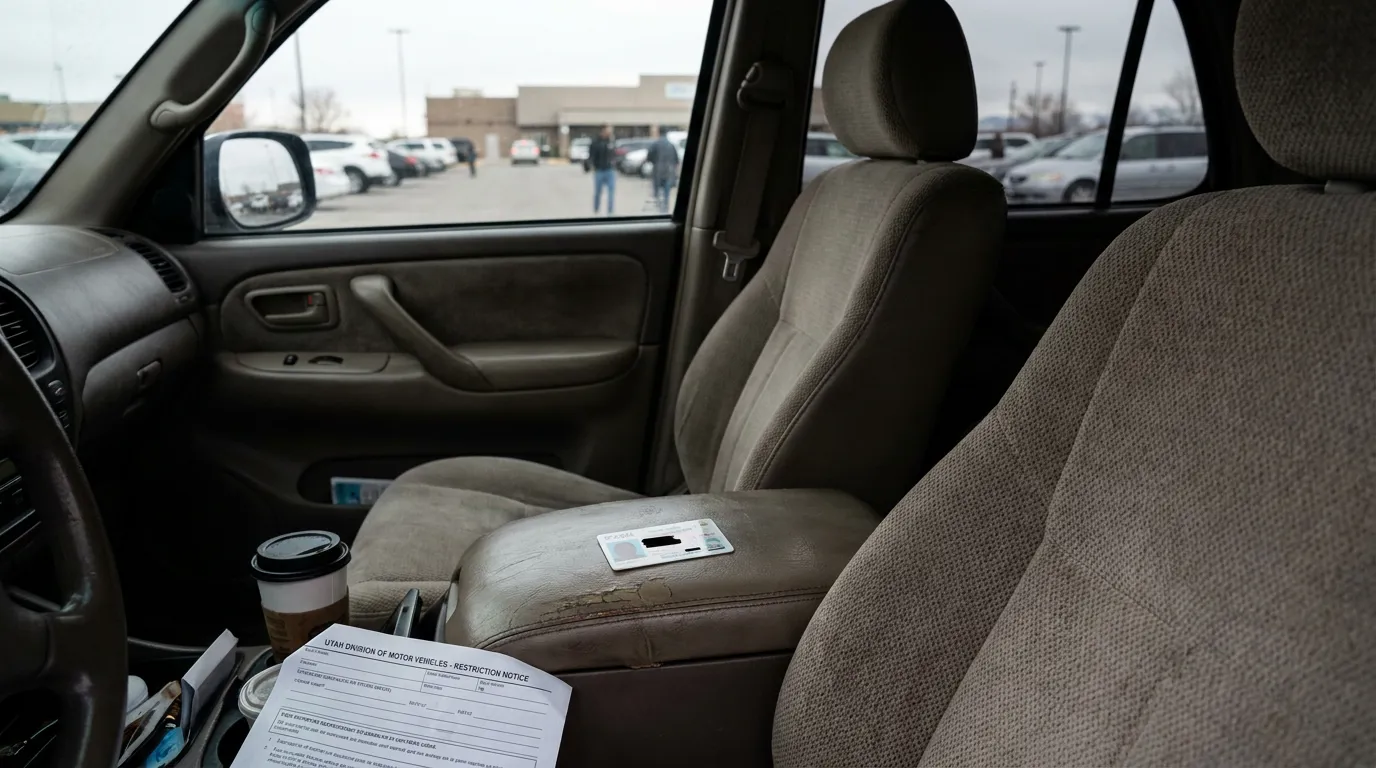
Many drivers are caught off guard because the restriction may not appear on the card itself. The restriction is tracked on your driving record, accessible to law enforcement. An officer who runs your license during a traffic stop will generally see the restriction even if you’re unaware of it.
Practical Considerations for Salt Lake City Drivers
The most common violation occurs by misjudging elimination time. Because the standard is any measurable amount rather than a numeric threshold, drinking the night before can create exposure the following morning. Individual metabolism, quantity consumed, and testing methodology all affect results, abstaining entirely while restricted is the only safe approach.
Defense strategy often focuses on standard DUI issues. Whether the stop was supported by reasonable suspicion, whether the testing device was properly calibrated and maintained, whether the sample was correctly collected and preserved, and whether the officer followed required procedures can all be examined. An attorney handling alcohol restricted driver utah matters will typically request discovery on maintenance and certification records early.
💡 Pro Tip: Certain mouthwashes, cough syrups, and hand sanitizers contain ethanol. If you’re restricted, check labels carefully, a breath sample taken shortly after use may not accurately reflect consumption.
Frequently Asked Questions
1. Does alcohol restricted driver status mean I cannot drive at all?
Generally, no. You retain driving privileges except that you’re prohibited from having any measurable alcohol in your system when driving. The Utah DLD alcohol restricted program is a conduct-based restriction rather than a suspension, though a separate suspension or revocation may also be in place.
2. Can I check my utah ARD status myself?
Yes. Request your driving record from the Driver License Division to confirm your status and end date. If the record appears inaccurate, correcting it may require a formal request.
3. Does a plea in abeyance protect me from the restriction?
Not necessarily. The statutory definition includes qualifying convictions later reduced under Section 76-3-402, so a reduction may still trigger alcohol restricted driver classification. Outcomes depend on specific disposition terms and how it’s reported.
4. Do out-of-state DUI convictions count in Utah?
Often yes. The definition covers statutes in any other state or U.S. territory that would constitute a qualifying violation if committed in Utah. Whether a particular out-of-state offense qualifies requires comparing the elements of both statutes.
5. Is the alcohol restriction the same as the interlock requirement?
No. They arise under different statutes and can run for different periods. A person may be subject to both simultaneously, and satisfying the interlock obligation doesn’t end the zero-tolerance restriction under Sections 41-6a-529 and 41-6a-530.
Protecting Your Driving Privileges Going Forward
Alcohol restricted driver status in Utah is a statutory consequence that can follow a conviction, reduced disposition, administrative suspension, or simply being under 21. It replaces Utah’s numeric BAC standard with zero tolerance enforced under Section 41-6a-530, lasts from two years to lifetime depending on the offense, and often runs alongside a separate ignition interlock obligation under Section 41-6a-518.2. Because these consequences attach through both courts and the Driver License Division, the specific facts of your case will drive the outcome.
If you’re facing a DUI charge or navigating an alcohol restriction in Salt Lake City, the attorneys at Nix Law are prepared to review your record, evaluate available defenses, and address time-sensitive administrative deadlines. Call 385-444-2442 or schedule a consultation today.